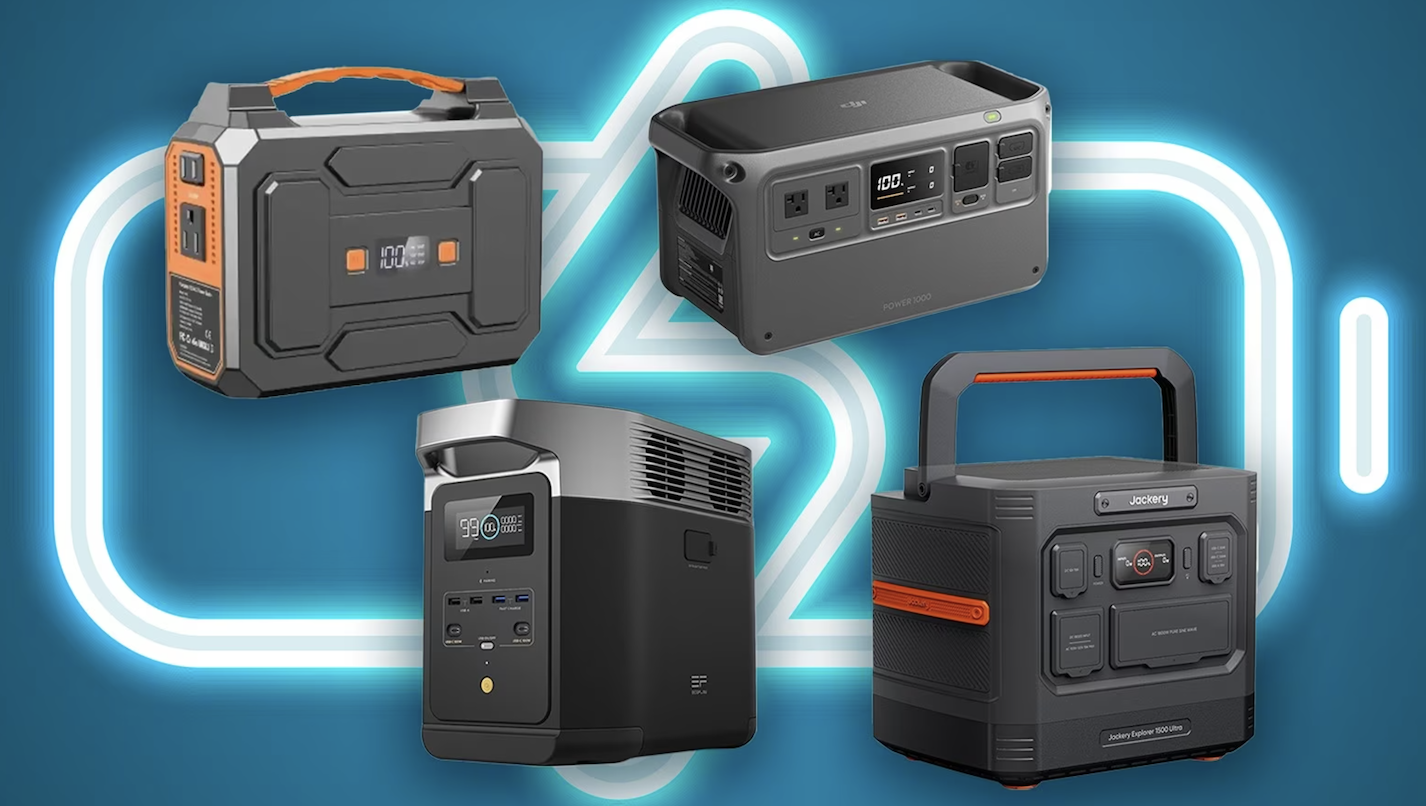
A power outage has a way of revealing exactly which devices a household truly depends on, from a refrigerator quietly protecting perishable food to a medical device that needs continuous power to function safely. Portable power stations have grown from a niche camping accessory into a mainstream backup power solution, offering a battery-based alternative to noisy gas generators for anything from a few hours of outage to a multi-day grid failure.
Choosing the right one means learning about capacity, output, recharging speed, and safety in terms that translate to real household needs rather than raw spec sheet numbers.
Capacity Ratings Explained in Plain Terms
A power station’s capacity, measured in watt-hours, describes the total amount of energy stored in its battery, and translating that number into practical runtime requires knowing how much power the devices being run draw in practice. A small station in the few-hundred-watt-hour range can keep phones charged and a few lights running for an extended outage, while a large station in the multi-kilowatt-hour range can support a refrigerator or a sump pump for many hours or even days depending on the specific appliance’s draw.
Calculating real-world runtime involves multiplying a device’s wattage by the number of hours it needs to run, then comparing that total against the station’s rated capacity while accounting for some energy loss during conversion from stored battery power to usable output. A refrigerator, for instance, doesn’t draw power continuously but cycles on and off to maintain temperature, meaning its average draw over a day is substantially lower than its peak draw when the compressor first starts.
- Watt-hour capacity: Represents total stored energy, the baseline number for estimating how long a station can power a given device.
- Continuous versus peak wattage: A device’s steady running wattage differs from its brief startup surge, both of which matter for sizing a station correctly.
- Expandable battery packs: Some brands, including EcoFlow and Anker, offer add-on battery modules that increase total capacity beyond the base unit.
- Conversion losses: Some energy is lost converting stored battery power to usable AC output, meaning real-world runtime is slightly lower than a pure capacity calculation suggests.
Buyers should list the specific appliances they most want to keep running during an outage, checking each one’s wattage label, before choosing a capacity tier, rather than picking a station size based on general assumptions about typical household power needs.
It helps to separate devices into two rough categories when planning: constant, predictable loads like phone chargers and lighting, which draw a steady low wattage and are easy to plan around, and intermittent, high-draw appliances like refrigerators, sump pumps, or space heaters, which cycle between idle and peak draw in ways that are harder to estimate without checking the specific appliance’s rating plate.
A household planning around a well pump or a medical device with strict power requirements should verify the exact peak wattage rather than relying on a rough average, since a power station that handles the average draw comfortably can still fail to start the device if its brief startup surge exceeds the station’s peak output rating.
Seasonal outage patterns are also worth factoring into capacity planning. A household in a region prone to winter storms might prioritize enough capacity to run a furnace’s blower motor and some lighting through a multi-day outage, while a household more concerned with summer storm season might weigh refrigerator and fan runtime more heavily. There’s rarely a single correct capacity tier for every household, since the right size depends entirely on which specific appliances matter most during the kind of outage a given region tends to experience.
Output Ports and Device Compatibility
A power station’s usefulness depends heavily on whether its output ports match the devices a household needs to power in practice. Standard AC outlets, mimicking a wall socket, allow a power station to run typical home appliances and electronics without any special adapter, while USB-A and USB-C ports handle phones, tablets, and laptops directly without needing the less efficient AC conversion step.
Higher-capacity USB-C ports supporting fast charging protocols have become increasingly common, allowing a power station to charge a laptop or phone at a speed comparable to its original wall charger rather than a slow trickle. Car-style 12-volt output ports remain useful for devices designed around vehicle power systems, and some larger stations include a dedicated port for solar panel input, distinct from the ports used to output power to devices.
- AC outlets: Allow direct use of standard home appliances and electronics without adapters, mimicking a typical wall socket.
- USB-C fast charging ports: Handle phones and laptops efficiently, often matching the charging speed of a device’s original wall adapter.
- 12-volt car-style outputs: Useful for devices built around vehicle power systems or car-specific accessories.
- Pass-through charging: Lets a station charge connected devices while itself being recharged simultaneously, useful during an ongoing outage with intermittent solar input.
Households with specific medical equipment needs should confirm both the wattage requirement and the type of output waveform a device requires, since some sensitive medical electronics specify a pure sine wave output rather than the modified sine wave some budget power stations produce.
The number of simultaneous ports matters as much as their individual capability for a household planning to run several devices at once. A station with only two AC outlets forces a choice between a refrigerator and a space heater, for example, while a unit with four or more outlets alongside several USB ports can spread a household’s most essential devices across separate connections without needing a power strip, which itself adds another point of potential failure and reduces the safety margin built into the station’s own overload protection. Some households find it useful to keep a short list taped near the power station itself, noting which outlet powers which device, simplifying quick decisions during the stress of a real outage rather than figuring out the setup from scratch in the dark.
App-based monitoring, now common across most mid-range and premium stations, lets a household check remaining battery percentage and estimated runtime from a phone rather than walking over to read a small screen on the unit itself. This becomes especially useful overnight, allowing a quick check of remaining capacity without disturbing a sleeping household by turning on lights near the unit.
Recharging Speed and Solar Options
How quickly a power station recharges affects how useful it remains during an extended outage rather than a brief one. Wall outlet charging, the fastest and most common method when grid power is available, can fully recharge many mid-size stations within a couple of hours on premium models, though budget models often take substantially longer. This matters most in a scenario where power returns briefly during a rolling outage, giving a narrow window to top off the battery before the next interruption.
Solar recharging extends a power station’s usefulness into scenarios where grid power remains unavailable for days, though realistic solar charging speed depends heavily on panel wattage, sunlight conditions, and panel angle relative to the sun. Car charging through a vehicle’s 12-volt outlet offers a third option, useful for topping off a station during travel or when grid and solar charging aren’t practical, though typically slower than a direct wall outlet connection.
- Wall outlet charging: The fastest recharging method when grid power is available, with premium models charging substantially faster than budget units.
- Solar panel input: Extends usefulness during extended outages, though speed depends on panel wattage, weather, and sun angle.
- Car charging ports: A slower backup recharging method useful while traveling or when other power sources aren’t accessible.
- Multi-source simultaneous charging: Some premium stations support combining solar and wall input at once to reduce total recharge time.
Buyers planning around extended multi-day outages, such as those in regions prone to prolonged storm-related power loss, should weigh solar compatibility carefully, since a station without practical solar recharging becomes a one-time-use battery once its initial charge runs out with no grid power to replenish it.
Safety Standards Worth Checking
Battery safety deserves careful attention given that a power station stores a substantial amount of energy in a single unit kept inside a home. Reputable manufacturers, including Anker, Jackery, and EcoFlow, subject their products to independent safety certification testing covering fire risk, short-circuit protection, and thermal management, and checking for recognized certification marks provides a baseline of confidence beyond marketing claims alone.
Battery chemistry has shifted in recent years toward lithium iron phosphate cells in many mid-size and large power stations, a chemistry generally considered more thermally stable than the lithium-ion cobalt chemistry used in some smaller and older units, translating to a lower fire risk profile and typically a longer cycle life before capacity noticeably degrades.
- Independent safety certification: Look for recognized certification marks indicating third-party testing of fire and short-circuit risk.
- Lithium iron phosphate batteries: Generally offer better thermal stability and longer cycle life compared to older lithium-ion cobalt chemistries.
- Built-in cooling fans: Active cooling during high-output use helps prevent overheating during demanding runs like powering a refrigerator continuously.
- Overload and short-circuit protection: Automatically shuts down output if a connected device draws more power than the station safely supports.
Ventilated storage away from direct heat sources and out of reach of small children remains a sensible practice regardless of a specific model’s safety certifications, since proper storage conditions reduce risk alongside whatever built-in protections a manufacturer has engineered into the unit itself.
Storage temperature affects both safety and long-term battery health. Leaving a power station in a hot garage or a car trunk through summer heat accelerates battery degradation more than storing it in a climate-controlled space, and extreme cold can temporarily reduce a battery’s available capacity until it warms back to a normal operating range. Rotating a stored unit through an occasional partial charge and discharge cycle, following the manufacturer’s specific storage guidance, helps maintain battery health for a unit that spends most of its life sitting idle waiting for an outage rather than in regular use.
Weighing Anker, Jackery, and EcoFlow Models
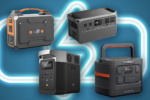
These three brands dominate much of the consumer portable power station market, each with a distinct approach. Jackery built an early reputation around reliable, straightforward units aimed at camping and light home backup use, with a lineup that remains popular for buyers wanting dependable performance without the most advanced features. Its solar panel compatibility across its own product line has made it a common choice for buyers planning around extended off-grid or outage scenarios.
EcoFlow has pushed further into high-capacity, expandable systems, with modular battery add-ons letting a household start with a base unit and grow total capacity over time rather than committing to a single fixed-size purchase upfront. This expandability appeals to buyers uncertain about their exact long-term power needs or planning to gradually build toward whole-home backup capability.
Anker, better known broadly for phone chargers and portable batteries, entered the power station market more recently but has built a competitive lineup spanning budget to premium tiers, often emphasizing fast recharging speeds and app-based monitoring features that let users check battery status and control output remotely through a smartphone.
- Jackery: Known for straightforward, dependable units with strong solar panel compatibility across its product line.
- EcoFlow: Offers expandable, modular systems allowing capacity to grow over time with add-on battery packs.
- Anker: Emphasizes fast recharging and app-based monitoring across a broad range of price tiers.
- Cross-shopping considerations: Comparing warranty length, certified safety testing, and app features across brands helps identify the best fit beyond raw capacity numbers.
Noise Levels and Home Use Scenarios
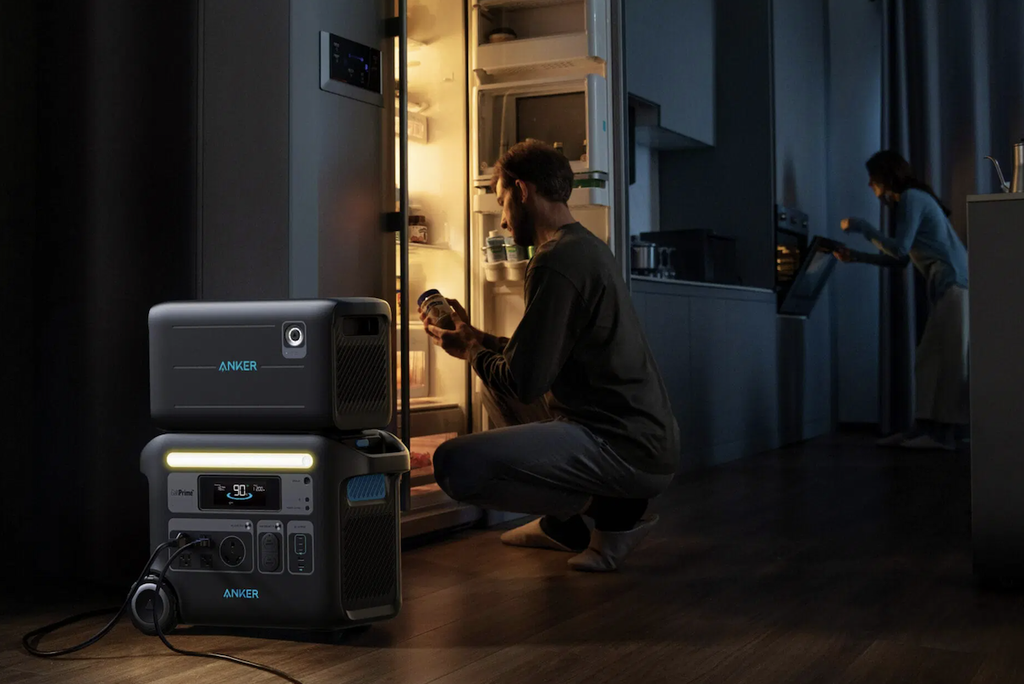
One of the clearest advantages a battery-based power station holds over a traditional gas generator is silent operation, since there’s no combustion engine producing exhaust fumes or mechanical noise. This makes a power station usable indoors, unlike a gas generator which requires outdoor placement and careful attention to exhaust ventilation to avoid dangerous carbon monoxide buildup.
The only noise a power station typically produces comes from internal cooling fans during high-output use, and even at maximum output this remains far quieter than any combustion generator, closer to the hum of a household appliance than anything requiring hearing protection or distant placement. This quiet operation makes power stations especially well suited to apartment living, where a gas generator would be impractical or against building rules, and to nighttime use during an outage without the noise disrupting sleep throughout a household.
Some households pair a power station with a small solar panel setup specifically to enable quiet, fume-free operation for extended outages, an increasingly common configuration for anyone in a region with frequent storm-related power loss who wants backup capability without the maintenance, fuel storage, and noise considerations that come with a traditional generator.
Final Thoughts
A portable power station earns its place in a home by matching capacity, output ports, and recharging options to the specific devices a household most needs during an outage. Sizing a unit around real appliance wattage, rather than a general assumption about power needs, prevents both overspending on unnecessary capacity and the disappointment of a station that can’t handle an essential device.
Solar compatibility becomes increasingly valuable the longer an outage might realistically last in a given region, while safety certification and battery chemistry deserve attention given how much energy a single unit stores. Comparing Jackery, EcoFlow, and Anker against a household’s specific needs, rather than choosing based on brand recognition alone, leads to backup power that performs reliably when it matters most.
Frequently Asked Questions
How long can a portable power station run a refrigerator?
Runtime depends on the station’s capacity and the refrigerator’s specific wattage, but a mid-size to large power station can often keep a standard refrigerator running for a day or more, given that compressors cycle on and off rather than drawing power continuously.
Are portable power stations safe to use indoors?
Yes, unlike gas generators, battery-based power stations produce no exhaust fumes and are generally safe for indoor use, provided the specific unit follows standard battery storage guidance around ventilation and heat exposure.
Can a power station be recharged while it’s powering devices?
Many models support pass-through charging, allowing simultaneous input and output, though this can sometimes generate more heat and slightly reduce overall charging efficiency compared to charging alone.
How does solar recharging speed compare to wall outlet charging?
Solar charging is generally slower and more variable than a direct wall outlet connection, depending on panel wattage, weather conditions, and sun angle, though it remains valuable during extended outages without grid power.
Do portable power stations lose capacity over time?
Like all rechargeable batteries, power stations gradually lose some maximum capacity over repeated charge cycles, with lithium iron phosphate models generally retaining usable capacity longer than older battery chemistries, sometimes lasting many years of periodic use before capacity loss becomes noticeable.
What size power station is right for a typical household emergency kit?
A mid-size station capable of running a few essential devices like a refrigerator, phone chargers, and some lighting for at least a day suits most households, though specific needs vary based on which appliances are considered essential and how long outages typically last in a given region.