
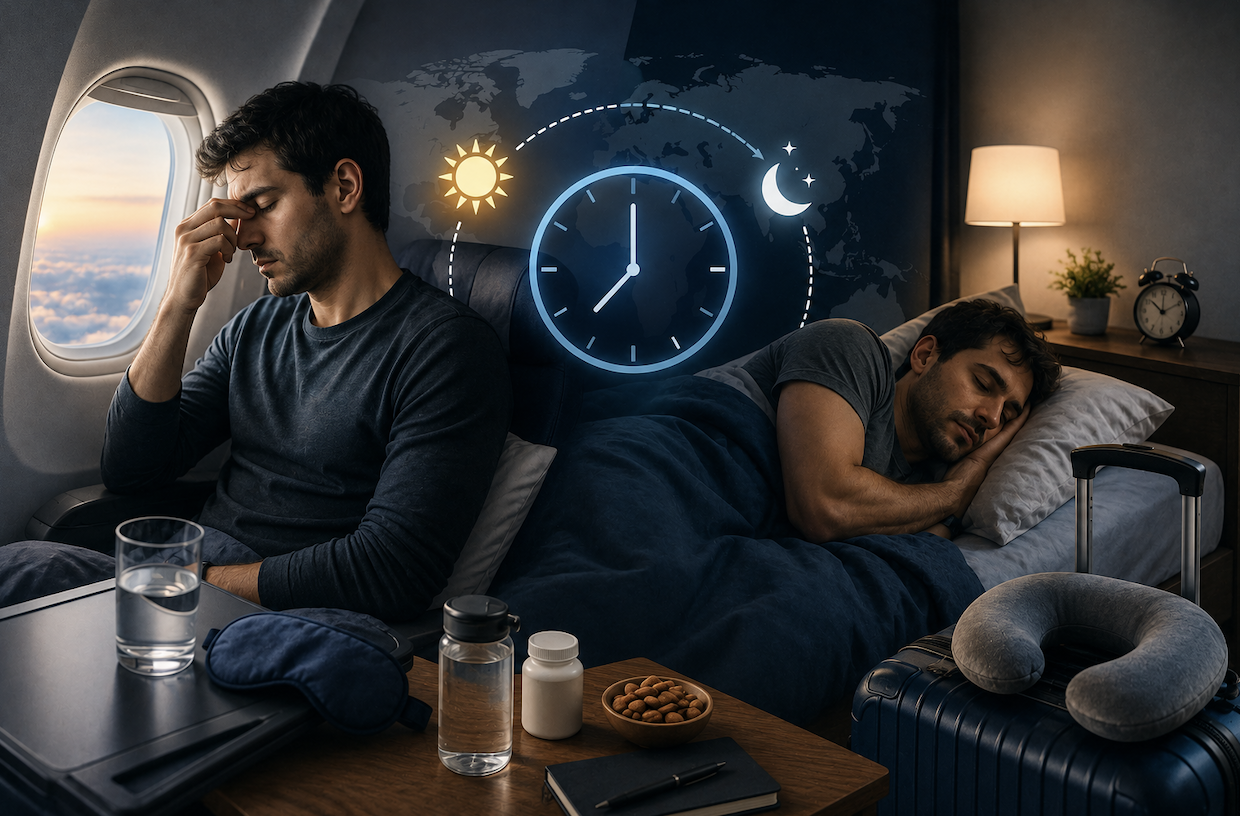
Arriving at an exciting travel destination only to feel genuinely exhausted, foggy, and out of sync for the first several days represents a frustrating experience familiar to anyone who has flown across multiple time zones. Understanding what actually causes jet lag, rather than simply enduring it as an unavoidable travel inconvenience, reveals genuinely practical strategies that can meaningfully reduce its impact on your trip.
What Jet Lag Actually Is
Jet lag is a temporary condition resulting from your body’s internal biological clock, called your circadian rhythm, being genuinely out of sync with the actual time at your new location after crossing multiple time zones relatively quickly. Your body’s internal systems, including sleep patterns, hormone release, and digestion, all operate according to this internal rhythm, which does not automatically adjust the moment you land somewhere with a different local time.
This mismatch between your body’s internal expectation and the actual external environment genuinely creates the characteristic symptoms most people associate with jet lag, including fatigue, difficulty sleeping at appropriate times, digestive disruption, and general mental fogginess during the adjustment period.
Why Crossing Time Zones Genuinely Affects Your Body This Way
Understanding the genuine biological mechanism behind jet lag helps explain why this specific type of travel fatigue differs meaningfully from simply feeling tired after a long journey.
- Your circadian rhythm is regulated by a specific area of your brain responding primarily to light exposure
- This internal clock typically adjusts gradually, roughly one time zone per day, rather than instantly
- Crossing multiple time zones quickly creates a genuine gap between your internal clock and actual local time
- This misalignment affects not just sleep, but hormone release, body temperature regulation, and digestion
This gradual adjustment rate genuinely explains why longer flights crossing more time zones typically produce more significant jet lag than shorter flights crossing fewer zones, since your body’s internal clock simply cannot catch up to a large sudden time change as quickly as the actual physical journey itself occurs.
Why Eastward and Westward Travel Genuinely Differ
A commonly reported but genuinely accurate observation involves eastward travel typically producing more significant jet lag than westward travel covering the same number of time zones, and understanding why reveals additional insight into how your circadian rhythm actually functions.
- Traveling east requires your body to adjust to an artificially shortened day, which is genuinely harder to achieve
- Traveling west requires adjusting to a lengthened day, which more naturally aligns with your body’s tendency to prefer a longer cycle
- This asymmetry means identical time zone distances can produce genuinely different jet lag severity depending on direction
- Understanding this can help you mentally prepare for potentially more significant adjustment when traveling eastward specifically
Practical Strategies to Prepare Before Your Trip
Taking proactive steps before you actually depart can genuinely reduce jet lag’s impact once you arrive, rather than only addressing the issue after symptoms have already developed.
- Gradually shift your sleep schedule several days before departure toward your destination’s time zone
- Ensure you are genuinely well-rested before your trip begins, rather than starting your journey already sleep-deprived
- Consider your flight timing when booking, since certain arrival times may better support easier adjustment
- Research your specific destination’s time difference and plan your pre-trip adjustment accordingly
Strategies for Managing Light Exposure Effectively
Since light exposure represents the primary signal your circadian rhythm uses to adjust, strategically managing your light exposure both during travel and after arrival provides one of the most genuinely effective tools for reducing jet lag.
- Seek natural sunlight exposure at your destination during appropriate times to help reset your internal clock
- Avoid bright light exposure during times that would reinforce your original time zone’s schedule
- Consider using sunglasses strategically to avoid unwanted light exposure at specific times, if genuinely needed
- Dim your environment appropriately in the evening to support your body’s natural transition toward sleep
Practical In-Flight Strategies Worth Considering
- Adjust your watch or phone to your destination’s time zone as soon as you board, mentally committing to this new schedule
- Try to sleep or stay awake according to your destination’s schedule rather than your departure location’s time
- Stay genuinely well-hydrated throughout your flight, since dehydration can worsen overall fatigue and jet lag symptoms
- Limit alcohol and excessive caffeine during your flight, since both can genuinely interfere with quality sleep
Strategies for the First Few Days After Arrival
- Get outside for natural light exposure as soon as reasonably possible after arrival, particularly in the morning
- Try to eat meals according to your new local schedule, even if you do not feel genuinely hungry initially
- Avoid the temptation to nap excessively during the day, which can genuinely prolong the overall adjustment period
- Stay physically active during appropriate daytime hours, which can help support your body’s adjustment process
Why Some People Experience Jet Lag More Severely Than Others
- Age can genuinely affect adjustment speed, with some research suggesting jet lag may become more pronounced with age
- Individual differences in circadian rhythm flexibility mean some people naturally adjust more easily than others
- Overall health, stress levels, and sleep quality before travel can all genuinely influence jet lag severity
- Frequent travelers sometimes develop somewhat better adaptation strategies through genuine repeated experience
Final Thoughts
Jet lag results from a genuine, measurable mismatch between your body’s internal circadian rhythm and your destination’s actual local time, producing characteristic symptoms that go beyond simple travel fatigue. Understanding this underlying mechanism and applying practical strategies around light exposure, sleep timing, and gradual pre-trip adjustment offers genuinely effective ways to meaningfully reduce jet lag’s impact rather than simply enduring it as an unavoidable consequence of long-distance travel.
Rather than viewing jet lag as something that simply happens to you upon arrival, treating it as a genuinely manageable, predictable physiological process you can proactively prepare for, starting before you even board your flight, offers the most practical path toward actually enjoying more of your trip rather than losing several days to fatigue and disorientation.
- Read more about Technewweb
Frequently Asked Questions
1. How long does jet lag typically last?
This varies considerably, though a commonly cited general guideline suggests roughly one day of adjustment needed per time zone crossed, meaning a trip crossing six time zones might involve approximately six days before you feel genuinely fully adjusted.
2. Are jet lag supplements or medications genuinely effective?
Some people find certain supplements or short-term sleep aids helpful for managing specific symptoms, though these should generally be used thoughtfully and ideally discussed with a healthcare provider, particularly for longer or more frequent travel.
3. Does jet lag affect everyone who crosses time zones?
Nearly everyone experiences some degree of circadian disruption when crossing multiple time zones quickly, though the actual severity varies considerably between individuals based on factors like age, health, and specific travel circumstances.
4. Is there a genuine difference between jet lag and simply being tired from travel?
Yes, genuine jet lag specifically involves your circadian rhythm being misaligned with local time, producing symptoms beyond simple fatigue, including disrupted sleep timing, digestive changes, and difficulty concentrating, distinct from the general tiredness any long journey might produce.
5. Can frequent business travelers genuinely reduce jet lag through experience and practice?
Many frequent travelers do report developing more effective personal strategies over time, combining consistent light management, sleep scheduling, and other genuinely practical techniques, though this typically represents learned strategy application rather than the body itself becoming inherently immune to jet lag.