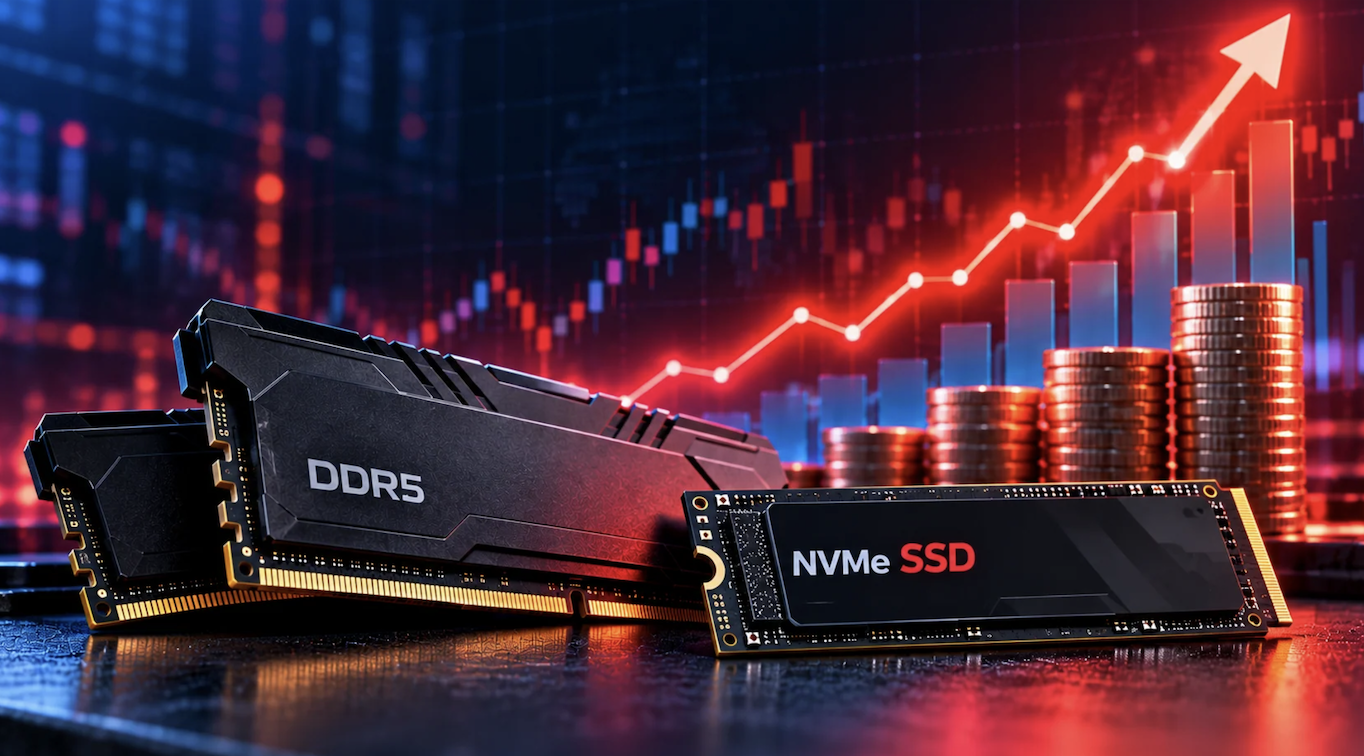
RAM prices in 2026 are still rising, but more slowly than earlier in the year, while SSD prices are moving at a different pace. For most PC buyers, the practical answer is to buy when you need a machine, check the memory and storage printed on the spec sheet, and skip capacity you will not use.
In this article, we will explore the two TrendForce forecasts, what they leave out, a buy-now-or-wait table by buyer type, and a spec-sheet checklist.
What the Latest Data Says About RAM Prices 2026
TrendForce, a market research firm, published a press release on September 30, 2026 projecting that conventional DRAM contract prices would rise 10 to 15 percent quarter on quarter in the fourth quarter. Contract prices are what PC makers and large buyers pay suppliers, not what you see on a store shelf. The US is the main market behind most of these reports, and prices in other countries also depend on exchange rates and local taxes.
A TrendForce news item dated October 20, 2026 describes the trend as a slowdown. It puts the second-quarter increase at roughly 80 percent and the third-quarter increase at roughly 40 percent. It lists three reasons for the cooling: a higher comparison base, weaker purchasing power among end customers, and price ceilings written into long-term supply agreements. Slower growth is still growth, and nothing on these pages suggests a drop is coming.
Two TrendForce Figures That Do Not Match
The October 20 piece says DRAM contract prices are expected to rise about 20 percent quarter on quarter. The September press release said 10 to 15 percent for conventional DRAM. Both come from the same firm, and the pages I read do not fully explain the gap. The first figure is labeled conventional DRAM and the second reads like a broader estimate, but the scope is not spelled out.
The sensible way to use this is to treat the range as roughly 10 to 20 percent and not pick the number you like. Either way, the direction is up. Neither figure is a forecast for the price of a memory kit or a laptop.
Storage Is Moving Differently From Memory
TrendForce projects NAND flash contract prices up 15 to 20 percent, with NAND wafer prices at historic highs. The split between buyer types matters here. Enterprise SSD prices are accelerating because of AI inference buildouts, while client SSD increases (the drives in ordinary PCs) are described as restrained. The reason given is that PC makers are working through inventory they built in the first half of 2026.
That inventory cushion will not last forever, and TrendForce does not say when it runs out. It also reports that some brands are cutting SSD capacities in mainstream models to save costs. For you, that means the same product line may ship with less storage than last year’s version at a similar price.
PC DRAM supply could shrink in 2027 as capacity shifts toward servers. Some PC brands are considering GDDR6 in place of GDDR7 graphics memory, which is in limited supply. CXMT’s 4F2 design could in theory shrink cell area by about 33 percent, but yield problems mean full commercialization is generally expected after 2028.
Buy Now or Wait: A Table by Buyer Type
This table is general guidance built on the fact that prices are still rising but decelerating. It is not financial advice and not a price prediction.
| Buyer type | Lean toward | Reasoning |
| Your current PC is failing or too slow for work | Buy now | The cost of waiting is lost time, and no page promises cheaper memory soon |
| Student starting a term | Buy now, modest spec | A deadline beats guessing the market; avoid extra capacity |
| Home user with a working PC that is just old | Wait, or upgrade one part | Nothing forces a purchase, and a single RAM or SSD upgrade may be enough |
| Gamer wanting a new graphics card | Compare carefully | Memory type matters, and GDDR7 supply is described as limited |
| Small business replacing several laptops | Buy in planned batches | Prices are rising, but stock and warranties matter more than timing |
| Someone who only wants a deal | Do not chase one | The pages give no retail price forecast to chase |
The common thread is to buy when the need is real.
Spec Sheet Checks Before You Pay
These are general buying habits, so confirm details on the seller’s own page.
Memory and Storage Listed
Look at how much RAM and what storage the exact model has, not just the product family name. Some laptops have memory soldered to the board, so you cannot add more later. Check whether the model you read about last year has quietly shipped with a smaller drive.
Price per Gigabyte
Divide the price by the gigabytes of storage to compare drives or laptops fairly, and pay for a bigger tier only if your files or games will fill it.
Return Policy
Read the return window and any restocking fee before you buy. If a laptop ships with less storage than you expected, an easy return protects you.
Gaps in the RAM Prices 2026 Data
The TrendForce pages give no retail price for any RAM kit, SSD, laptop or phone. They give no consumer price forecast, and the 10 to 15 percent and about 20 percent figures cover contract prices, not what you will pay. They also say consumer DRAM prices are expected to keep rising but more slowly, without a number. Both figures come from one research firm, with no second source to check them.
Conclusion
The data points to higher memory prices that are rising more slowly, and SSD pricing that is held back for now.
The useful moves are practical: read the spec sheet, compare price per gigabyte, and watch for models that cut storage. Buy when you need the device and keep the receipt and return window handy.
Frequently Asked Questions
Will RAM Prices Fall in 2027?
The pages read do not forecast a fall. They say PC DRAM supply could decline in 2027 as capacity shifts to servers, which points the other way.
How Much Will DRAM Contract Prices Rise in the Fourth Quarter?
TrendForce gave 10 to 15 percent for conventional DRAM in September and about 20 percent in an October piece. The pages do not fully explain the difference.
Are SSD Prices Going up as Fast as RAM Prices?
Not for ordinary PCs, according to TrendForce. NAND contract prices are projected up 15 to 20 percent, but client SSD increases are described as restrained for now.
Should I Buy a Laptop Now or Wait for Lower Prices?
It depends on your need. If your current machine is failing, buying now is reasonable, and the sources do not promise cheaper laptops soon.
Do Contract Prices Show What I Will Pay in a Store?
No. Contract prices are what suppliers charge large buyers, and the pages give no retail prices. Check the actual listing and the return policy.