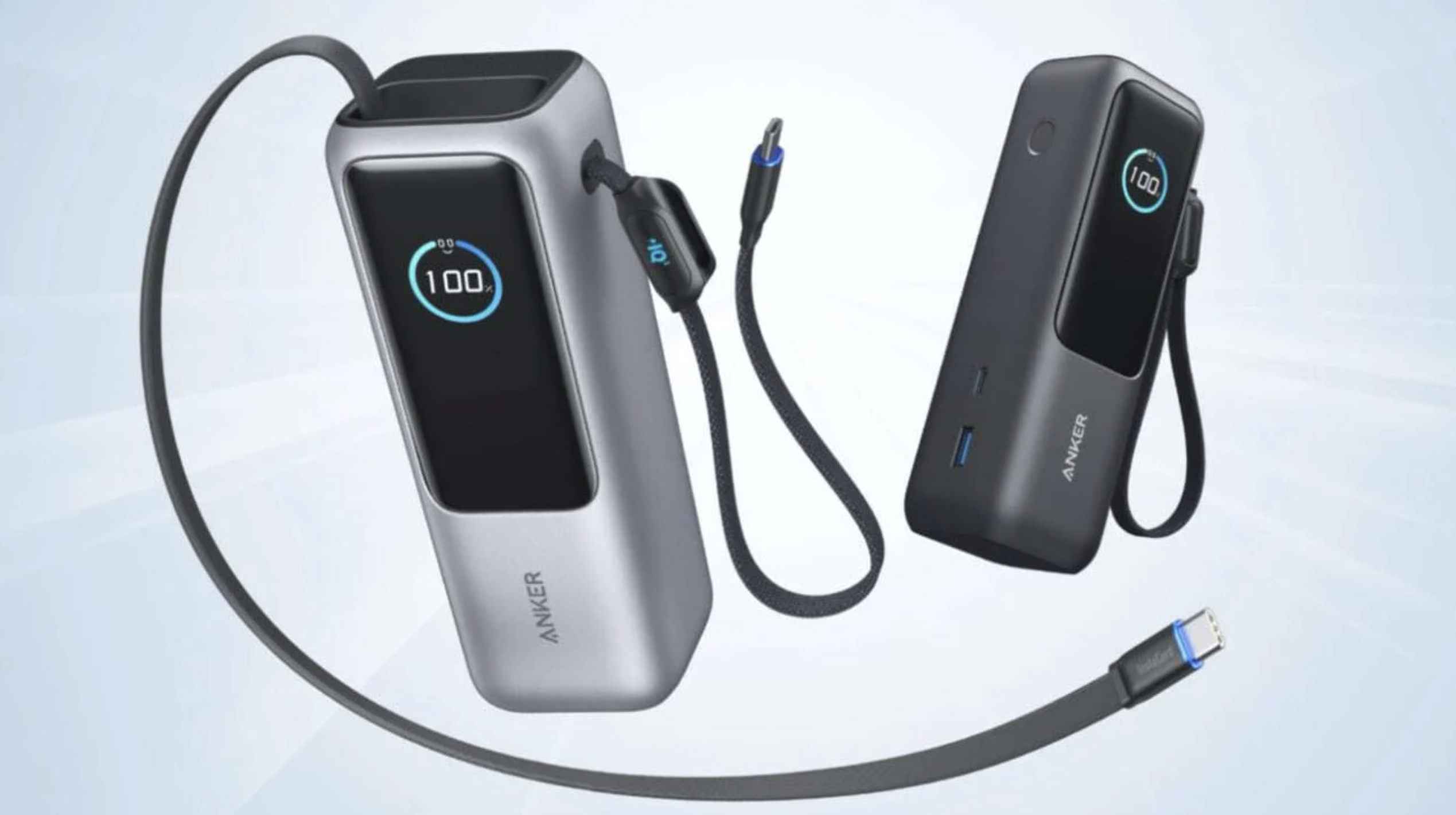
Standing in the electronics aisle staring at a wall of portable chargers, each labeled with a number like 5000, 10000, or 20000, can feel confusing without a frame of reference for what those numbers translate to in day-to-day, real-world use.
Capacity is the single most important spec on a power bank, but it is often poorly explained on packaging, leaving buyers to either overbuy and carry a heavy brick they never fully use or underbuy and run out of power halfway through a long day or trip.
This guide breaks capacity into plain terms, walks through matching a charger to real devices and real routines, and covers the other specs, from charging speed to airline rules, that shape a smart purchase for everyday carry and travel alike.
Capacity Explained in Plain Terms
A portable charger’s capacity is measured in milliamp hours, abbreviated mAh, which represents how much electrical charge the battery can store. A typical phone battery holds somewhere between 3,000 and 5,000 mAh, so a power bank rated at 10,000 mAh should, in theory, charge an average phone about two times over before needing a recharge of its own from a wall outlet.
- Real-world efficiency loss: Converting stored energy from the power bank’s voltage to a phone’s charging voltage wastes some power as heat, so expect to get roughly 70 to 80 percent of the rated capacity delivered as a real, usable charge.
- Phone batteries: Most smartphones hold between 3,000 and 5,000 mAh, meaning a 10,000 mAh bank delivers around one and a half to two full charges in practice, depending on the exact phone model and its screen usage during charging.
- Tablet batteries: Tablets often hold 7,000 to 10,000 mAh, so a single 10,000 mAh power bank might only manage one partial charge for a larger device, leaving less of a buffer than most owners expect.
- Laptop batteries: Laptops vary widely, often holding 40,000 to 60,000 mWh, which uses a different unit and requires checking a charger’s wattage output rather than just its mAh rating.
Converting Between Units
Laptops are often rated in watt-hours rather than milliamp hours, which trips up many shoppers comparing specs across device types. A rough conversion multiplies milliamp hours by voltage and divides by 1,000 to estimate watt-hours, though airlines and manufacturers publish exact figures that are worth checking directly rather than estimating when it matters, such as for air travel rules.
For example, a typical power bank running at 3.7 volts and rated at 20,000 mAh works out to roughly 74 watt-hours, comfortably under most airline limits. A charger advertised with a higher output voltage for laptop charging might carry a different printed watt-hour figure even at the same mAh rating, which is why relying on the manufacturer’s printed number, rather than doing the math independently, is the safer approach when packing for a flight.
Matching a Charger to Your Devices
The right capacity depends entirely on what you are charging and how often you expect to top up before reaching an outlet again.
- Daily phone top-ups: A compact 5,000 to 10,000 mAh charger covers a single device through a busy day without adding much bulk to a bag.
- Multi-day travel: A 20,000 mAh or larger charger supports multiple devices or several days without consistent outlet access, useful for camping trips, long flights, or extended road trips far from a reliable outlet.
- Tablet or camera charging: Devices with larger batteries need either a higher-capacity bank or realistic expectations about only getting a partial charge from a smaller unit.
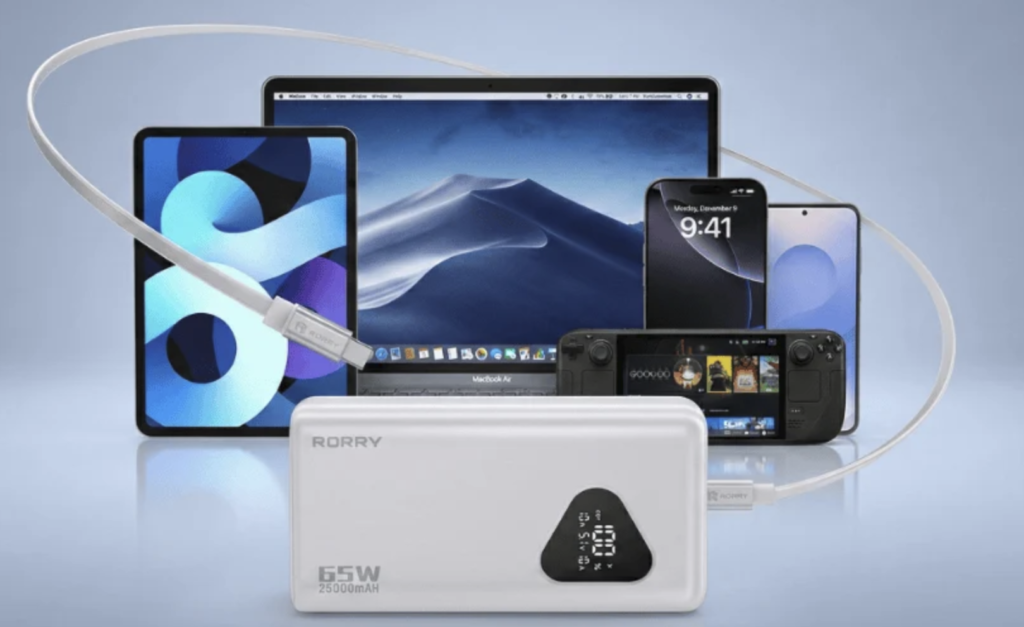
- Laptop charging: Only banks rated for higher wattage output, often 45 watts or more through USB-C, can deliver a real charge to a laptop rather than just topping off a small amount.
Thinking About Charging Frequency
Someone who charges their phone every night at home and only occasionally needs a backup during a long day out has very different needs than someone who travels for a week at a time without reliable outlet access. Mapping out a typical week and noting how often you would reach for a power bank gives a clearer sense of capacity needs than simply buying the largest one available, since bigger capacity always comes with more size and weight to carry around.
Charging Multiple Devices at Once
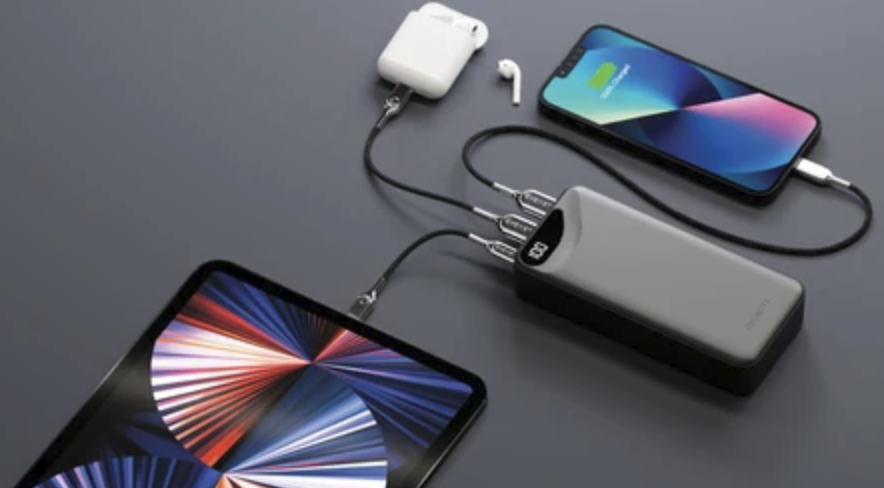
Households with a phone, a smartwatch, and a pair of wireless earbuds to keep topped up often find a single large charger with multiple output ports more convenient than several small single-port units. Splitting output across two or three devices at once does draw down a shared capacity faster, so a family planning to charge several gadgets simultaneously during a road trip should lean toward a higher-capacity bank than they might otherwise consider for a single device alone.
Charging Speed and Port Types
Capacity tells you how much energy a charger holds, but charging speed tells you how fast that energy reaches your device, and the two specs are independent of each other.
- USB-A ports: The older standard port, still common on budget chargers, typically delivers slower charging speeds than newer alternatives.
- USB-C with Power Delivery: Faster charging standards built into most modern phones and many tablets, often cutting charge times by a wide margin compared to older ports.
- Wireless charging pads: Some power banks include a built-in wireless charging surface, convenient but generally slower than a cable connection.
- Pass-through charging: This feature lets a power bank charge a connected device while itself being charged from a wall outlet, useful for overnight bedside setups.
Matching Cable to Port Capability
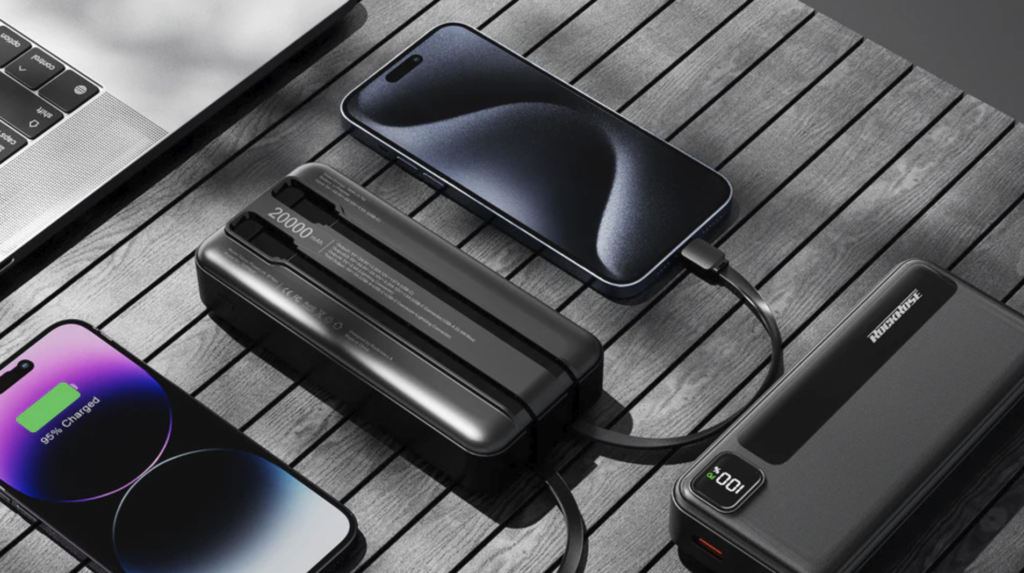
A fast-charging power bank paired with a cheap or damaged cable will not deliver its full rated speed, since the cable itself has to support the same charging standard as the port, carrying both enough current and the right data lines to negotiate a faster charge rate. Investing in a quality cable rated for the charger’s maximum output avoids leaving speed on the table after spending extra for a premium charging port.
Charging Protocols Explained
Beyond the basic USB-C versus USB-A distinction, several charging protocols govern how fast and safely power moves between a bank and a device. Power Delivery, common across most modern phones and laptops, negotiates the right voltage and current automatically once a device is connected. Older proprietary fast-charging standards from individual phone makers sometimes require a specific charger and cable combination to reach their fastest advertised speeds, so a generic charger might still work but deliver slower results than one built to match that brand’s exact specification. Checking a phone’s own charging specs before assuming any fast charger will unlock the fastest possible speed avoids a common source of disappointment after a purchase.
Size, Weight, and Travel Tradeoffs
Capacity and portability pull in opposite directions, and finding the right balance depends on how a charger will be carried day to day in real life.
- Pocket-sized banks: Compact 5,000 mAh chargers slide into a pocket or small bag easily but need more frequent recharging themselves.
- Mid-size banks: A 10,000 to 20,000 mAh charger strikes a common balance for daily carry in a backpack or purse without feeling like dead weight.
- High-capacity bricks: Chargers above 20,000 mAh deliver the most backup power but add noticeable weight, often half a pound or more.
- Slim profile options: Some manufacturers prioritize a thin design over raw capacity, trading some backup power for something that fits flat in a bag’s front pocket or a jacket’s inner lining.
Carrying a charger that never gets used because it feels too bulky defeats the purpose entirely, so weighing a model in hand at a store, if possible, gives a better sense of real-world comfort than specs on a page alone.
Matching a Charger to a Bag or Pocket
A charger that fits comfortably in a coat pocket on a commute might feel cramped tucked into an already-full travel bag alongside cables, a tablet, and other essentials. Measuring the dimensions of a prospective charger against the specific bag or pocket it will live in, rather than relying on a general sense of size from product photos, prevents an awkward surprise after unboxing a new purchase. Some commuters keep two chargers of different sizes, a tiny one for a jacket pocket on short errands and a larger one tucked into a backpack for longer days away from home.
Airline Rules and Safety Basics
Lithium-ion batteries inside portable chargers are subject to airline restrictions, and ignoring them can mean a charger gets confiscated at security or, worse, creates a safety hazard in checked luggage.
- Carry-on only: Nearly all airlines require portable chargers to travel in carry-on bags rather than checked luggage, since a fire risk is far easier to manage in the cabin than in the cargo hold.
- Watt-hour limits: Most airlines cap power banks at 100 watt-hours without special approval, which covers the vast majority of consumer models sold at retail stores and online.
- Printed capacity labeling: Airport security staff often look for a watt-hour or mAh rating printed directly on the device casing, so a charger without clearly visible labeling can cause delays at the checkpoint.
- Multiple chargers: Some airlines limit the total number of power banks a single passenger can carry, so travelers with several devices should check the policy of their specific airline ahead of a trip rather than assuming every carrier follows the same rule.
Heat and Storage Safety
Lithium-ion batteries degrade faster when left in hot environments, such as a car’s glovebox in summer, a beach bag in direct sunlight, or a gym bag left in a hot trunk after a workout. Storing a power bank at room temperature when not in use, and avoiding letting it sit at a near-empty charge for extended periods, helps preserve capacity over its lifespan.
What to Do When a Charger Overheats
A power bank that becomes noticeably warm during normal charging is usually fine, since some heat generation is expected, especially during fast charging. A charger that becomes hot to the touch, swells, or produces an unusual smell should be unplugged immediately and set aside in a safe, non-flammable location, since these are signs of a potential battery fault.
Continuing to use a damaged power bank carries real fire risk, and most manufacturers offer a straightforward warranty replacement process for a unit showing these warning signs within its coverage period, so it is worth registering a new purchase and keeping the receipt handy just in case a claim is ever needed down the road.
Caring for Your Power Bank Over Time
Like any lithium-ion battery, a portable charger’s maximum capacity degrades gradually with each charge cycle, and a few habits can slow that decline.
- Avoid full depletion: Letting a charger sit completely empty for long stretches stresses the battery more than keeping it partially charged during storage.
- Moderate charging speed: Using the fastest available charging speed every single time generates more heat, which can accelerate long-term wear compared to a standard, more moderate charging speed.
- Periodic use: A charger left untouched in a drawer for months can lose capacity simply from age, so cycling it occasionally keeps the battery healthier.
- Firmware and port cleaning: Keeping ports free of lint and debris ensures a solid connection, preventing slow or interrupted charging that can strain the battery over repeated attempts to reconnect.
A well-maintained power bank should retain the bulk of its original rated capacity for a couple of years of regular, everyday use, though eventually all rechargeable batteries decline enough that a replacement becomes the more practical choice.
Recycling an Old Power Bank
Portable chargers should never go into regular household trash because of the fire risk a damaged lithium-ion cell poses once crushed or punctured inside a garbage truck or landfill. Most electronics retailers and many municipal recycling programs accept old power banks for proper disposal, often at no cost.
Taping over the charging ports before transport is a reasonable precaution, since it reduces the chance of an accidental short circuit while an old charger sits in a collection bin or drop-off box awaiting pickup.
Final Thoughts
Choosing the right portable charger capacity comes down to being honest about how and where it will get used day to day, rather than defaulting to the largest number on the shelf.
A compact charger covers daily top-ups without adding bulk, while a higher-capacity model earns its weight on multi-day trips or when charging several devices. Paying attention to charging speed, port type, and cable quality ensures that stored capacity translates into fast, reliable charging rather than a slow trickle.
With basic care around storage temperature and charge cycles, a well-chosen power bank should serve reliably for years, making it one of the more practical small investments a person can make toward staying connected while away from a wall outlet.
Read more about TechNewWeb
Frequently Asked Questions
What capacity is best for a typical daily commute?
A 10,000 mAh charger covers most commuters comfortably, delivering roughly one and a half to two phone charges while remaining light enough to carry without a second thought. Anyone with a longer commute, multiple devices to charge, or a habit of forgetting to charge overnight at home might lean toward a slightly larger capacity for extra buffer against an unexpectedly long day.
Can a portable charger damage a phone’s battery?
A quality charger from a reputable brand, used with proper cables, poses little risk to a phone’s battery health. Cheap, poorly made chargers without proper voltage regulation can occasionally cause issues, which is one reason it pays to buy from established brands with a track record of safety certifications rather than the lowest-priced option found in an online marketplace listing with no verified reviews.
How long does a portable charger take to recharge itself?
Recharge time depends on both the charger’s capacity and the wattage of the wall adapter used to refill it. A 20,000 mAh charger might take four to six hours with a standard adapter, while a fast-charging-compatible model paired with a high-wattage wall adapter can cut that time by a wide margin, sometimes to under two hours for the same capacity. Checking the maximum input wattage printed on the charger itself, rather than assuming any wall adapter will deliver the fastest possible refill, helps set realistic expectations before a trip.
Is it safe to leave a portable charger plugged in overnight?
Most modern power banks include built-in circuitry that stops charging once full, making overnight charging generally safe. That said, unplugging once charging is complete is still a reasonable habit, since it avoids unnecessary heat buildup over many hours of being plugged in unattended, and it frees up an outlet for other devices waiting to charge during the night.
Do portable chargers lose capacity just from sitting unused?
Yes, lithium-ion batteries experience a slow, natural self-discharge even without use, and extended storage at either a full or completely empty charge accelerates long-term capacity loss more than most owners expect from a device that spends most of its life sitting in a drawer. Storing a charger at around half capacity during long breaks between trips is a reasonable practice for preserving battery health over the months it might sit unused in a drawer or travel bag.
Can one large power bank replace multiple smaller ones?
In many cases yes, since a single high-capacity charger with multiple ports can charge several devices either at once or across a day, replacing the need to carry separate smaller units. The tradeoff is added bulk and weight compared to carrying a couple of lighter, lower-capacity chargers split between bags, so the right answer often depends on whether one person carries most of the gear or a group splits it across several bags.