Fitness trackers have become considerably more capable at the budget tier, but understanding realistic accuracy expectations and which features genuinely matter for your specific goals makes the difference between a satisfying purchase and a disappointing one. Here’s a thorough breakdown of what to actually prioritize.
What Fitness Trackers Actually Measure
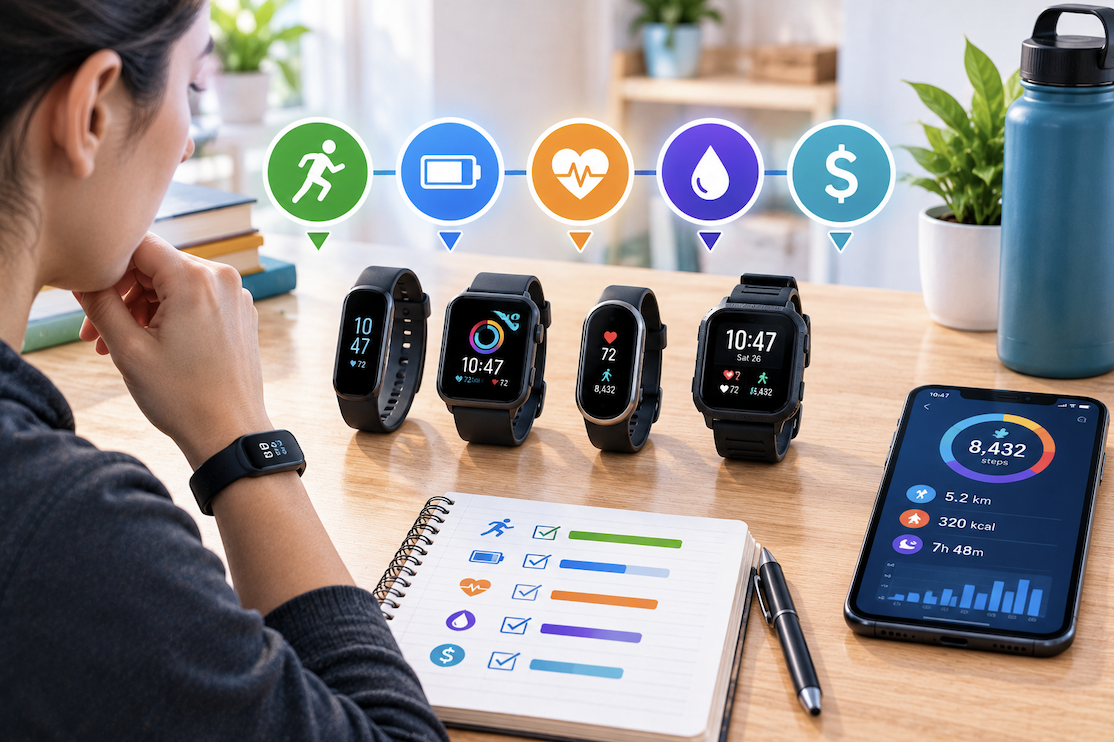
At their core, most fitness trackers measure heart rate through optical sensors against the skin, movement through an accelerometer for step counting and activity detection, and sometimes blood oxygen levels through additional sensors. Understanding that these are all indirect, sensor-based estimates rather than clinical-grade measurements helps set appropriate expectations for accuracy across every metric discussed throughout this guide.
Heart Rate Accuracy: Realistic Expectations
Optical heart rate sensors, which shine light through the skin to detect blood flow changes, generally perform reasonably well for steady-state activities like walking or resting heart rate, but accuracy tends to decline during high-intensity exercise or activities involving significant wrist movement, like weightlifting. Budget trackers, using simpler sensor technology than premium models, typically show a wider accuracy gap during these more demanding conditions specifically, which is worth knowing before relying heavily on heart rate data for structured training.
Step Counting Accuracy
Step counting is generally one of the more reliable metrics across both budget and premium trackers, though accuracy can still vary during activities involving arm movement without actual walking, like pushing a stroller or washing dishes, which can sometimes register as steps despite no actual walking occurring. For general activity tracking purposes, this level of accuracy is generally sufficient, though it’s worth understanding as a limitation rather than assuming perfect precision.
Understanding Calorie Estimate Limitations
Calorie burn estimates provided by fitness trackers are calculated indirectly from heart rate, movement, and basic personal information like weight and height, making them inherently rough approximations rather than precise measurements. These figures are more useful for tracking relative trends over time than as an exact number to rely on for precise calorie counting purposes.
Sleep Tracking: What It Can and Can’t Tell You
Budget fitness trackers can reasonably estimate total sleep duration and detect broad movement patterns suggesting restlessness, but detailed sleep stage breakdowns, similar to the smartwatch sleep tracking discussed in an earlier guide, tend to be less precise at this price tier than premium alternatives with more sophisticated sensors. This data remains useful for spotting general sleep pattern trends over time, but shouldn’t be treated as a clinical-grade sleep study replacement.
Charging Method and Convenience
Some budget trackers use a proprietary charging cable or dock, while others support standard USB connections, and checking which type a specific model uses matters for both convenience and the practical risk of losing a proprietary cable, which can be harder to replace than a standard, widely available charging cable.
Battery Life: What to Actually Expect
Battery life varies considerably between models, with simpler trackers lacking a full-color display or continuous heart rate monitoring generally lasting longer between charges than more feature-rich devices. Checking reviews for real-world battery life specifically with continuous heart rate tracking enabled, rather than relying on manufacturer-advertised figures that sometimes reflect a more limited-feature testing condition, gives a more accurate sense of what to expect day to day.
Display Types and Considerations
Budget trackers range from simple, battery-efficient monochrome displays to more vibrant full-color touchscreens that consume considerably more power. For anyone prioritizing battery life and basic activity tracking over a rich visual interface, a simpler display type offers a reasonable tradeoff, while those wanting a more smartwatch-like experience should expect correspondingly shorter battery life as the cost of that richer display.
Water Resistance for Swimming and Showering
As covered in the general smartwatch guide, checking a tracker’s specific water resistance rating matters considerably for anyone planning to swim or shower while wearing it, since a rating sufficient for sweat and splashes doesn’t necessarily mean the device can handle actual submersion. Confirming a specific swim-rated certification, rather than assuming general water resistance covers this use case, avoids potential water damage from a misunderstanding about the device’s actual capabilities.
Built-In GPS vs Connected GPS
Some budget trackers include built-in GPS for accurate outdoor activity tracking without needing a paired phone nearby, while others rely on connected GPS, borrowing location data from a nearby phone instead. For anyone who prefers running or cycling without carrying a phone, confirming built-in GPS specifically, rather than assuming any tracker includes it, is an important check before purchase, similar to the GPS guidance covered in the earlier smartwatch guide.
Companion App Quality
The companion smartphone app a tracker pairs with significantly affects the overall user experience, since the tracker itself typically has limited on-device data visualization compared to what a well-designed app can present. Reading reviews that specifically evaluate the companion app’s usability and data presentation, rather than focusing purely on the physical device’s specifications, gives a more complete picture of the actual day-to-day experience.
Band Comfort and Material Considerations
Similar to the smartwatch band guidance covered in an earlier guide, silicone bands remain the most common and generally comfortable choice for extended daily wear and exercise, though some people find them less breathable during long wear periods compared to woven alternatives. Checking whether a specific tracker supports standard band sizes for aftermarket replacement adds useful flexibility if the included band doesn’t suit personal preference long-term.
Syncing With Other Health and Fitness Apps
Many fitness trackers can sync data with broader health platforms and third-party fitness apps, which matters for anyone who already uses a specific app ecosystem for tracking nutrition, structured training plans, or broader health data. Confirming compatibility with your specific existing apps before purchase avoids ending up with a tracker whose data remains siloed within its own separate ecosystem.
Considering Continuous vs On-Demand Heart Rate Monitoring
Continuous heart rate monitoring provides more complete data throughout the day but consumes meaningfully more battery than on-demand monitoring, which only checks heart rate periodically or when manually requested. Deciding how important continuous, all-day heart rate data genuinely is for your specific goals helps determine whether the battery life tradeoff of continuous monitoring is worthwhile for your particular use case.
Considering Menstrual Cycle Tracking Features
Some fitness trackers include menstrual cycle tracking features, using logged data or, in some cases, temperature sensors to estimate cycle phases. For anyone specifically interested in this feature, checking its accuracy and data privacy handling specifically is worth doing, since this represents particularly sensitive personal health data deserving the same privacy consideration discussed in earlier smart home and general privacy guides.
Considering Blood Oxygen and Additional Sensors
Some budget trackers now include blood oxygen (SpO2) sensors, though the practical usefulness for casual fitness tracking purposes is more limited than the marketing sometimes suggests, and accuracy at the budget tier for this specific metric tends to be less reliable than more established measurements like heart rate and step counting.
Notification Handling on Fitness Trackers
Most fitness trackers, even budget models, can mirror basic phone notifications, though the depth of interaction (whether you can reply to messages, for instance) varies considerably and is generally more limited than a full smartwatch, discussed in the earlier smartwatch buying guide. Setting realistic expectations that a fitness tracker offers basic notification awareness rather than full smartwatch functionality avoids disappointment for anyone expecting more comprehensive features.
Budget vs Mid-Range Tradeoffs
True budget fitness trackers generally compromise on sensor accuracy, display quality, and battery efficiency compared to mid-range options, though for basic activity awareness and general trend tracking, these compromises matter less than they would for someone relying heavily on precise data for structured athletic training. A mid-range tracker becomes more worth the extra cost specifically for anyone who wants more reliable heart rate accuracy during exercise or built-in GPS for outdoor activities.
Considering a Tracker’s Software Update Longevity
Similar to the smartwatch software support guidance from an earlier guide, checking a manufacturer’s history of providing ongoing software updates for previous tracker models gives a reasonable indication of how long a new purchase can be expected to remain fully supported before potentially losing access to app updates or new features.
Reading Reviews for Real-World Accuracy Testing
Since manufacturer specifications rarely address real-world accuracy limitations directly, seeking out reviews that specifically compare a tracker’s readings against a more established reference device or method gives a far more reliable sense of actual accuracy than marketing materials or surface-level reviews focused primarily on design and features.
Setting Realistic Fitness Goals With Tracker Data
Using a fitness tracker most effectively means focusing on personal trends and consistency over time rather than treating any single day’s numbers as precisely accurate in isolation, similar to the trend-focused approach that makes sense given the sensor accuracy limitations discussed throughout this guide.
Considering Return and Exchange Policies Before Buying
Given how personal comfort and fit preferences are for something worn all day, checking a retailer’s return policy specifically for opened wearable devices, similar to the earbuds return policy guidance covered in an earlier guide, allows testing real-world comfort and daily usability before fully committing, since these factors are often harder to judge from product photos and specifications alone than from actual extended wear.
Considering Total Cost Including Subscription Features
Some fitness tracker ecosystems place advanced analytics or coaching features behind a separate subscription fee beyond the initial device purchase, similar to the subscription considerations discussed in earlier smartwatch and cloud service guides. Checking whether the core features you actually want require this additional ongoing cost avoids an unexpected additional expense beyond the device’s advertised price.
Considering How Skin Tone Affects Optical Sensor Accuracy
Research has shown that optical heart rate and blood oxygen sensors can show varying accuracy across different skin tones, an important limitation worth being aware of regardless of price tier, though budget devices with simpler sensor technology may show this variation more noticeably than premium devices using more advanced sensor calibration specifically designed to address this known limitation.
Common Budget Fitness Tracker Mistakes
Expecting clinical-grade accuracy from a budget tracker’s heart rate or sleep data is a common and understandable mistake, given how confidently this data is often presented within tracking apps despite the underlying sensor limitations discussed throughout this guide. Choosing a tracker based on price alone without confirming it supports the specific features that matter most for your personal goals, like built-in GPS or swim tracking, is another common and avoidable oversight.
Comparing Fitness Trackers to Dedicated Sports Watches
For anyone seriously training for a specific sport, particularly running or cycling, a dedicated sports watch designed around that activity typically offers more accurate, sport-specific metrics than a general-purpose budget fitness tracker, which is built to handle a broad range of everyday activities reasonably well rather than excelling at any single specialized use case. Understanding this distinction helps set expectations for anyone considering a budget tracker specifically for serious athletic training rather than general daily activity awareness.
Considering a Tracker as Part of a Broader Health Approach
A fitness tracker works best as one input alongside other health-supporting habits like consistent sleep, balanced nutrition, and regular movement, rather than as a standalone solution expected to drive behavior change on its own. The data it provides is most valuable when it prompts genuine reflection and adjustment rather than being checked passively without translating into any actual behavior change.
Considering Compatibility With Future Devices
Since fitness trackers are typically kept for a couple of years, considering whether a specific model’s manufacturer has a track record of maintaining compatibility with newer phone operating system versions over time helps avoid a tracker becoming prematurely unusable due to app compatibility issues well before the physical device itself would otherwise need replacement.
Considering How Household Members Might Share a Tracker
For a tracker occasionally shared between household members rather than used by one dedicated person, checking whether the device and its app support switching between multiple user profiles cleanly avoids mixing one person’s activity data with another’s, which most single-user-focused budget trackers don’t handle particularly well without some manual profile switching effort.
Conclusion
For most casual fitness tracking purposes, a budget tracker with reasonable battery life and basic step and heart rate tracking covers the core need well, though anyone relying on precise data for structured training should consider a mid-range option with better sensor accuracy. Setting realistic expectations for what any fitness tracker’s sensors can and can’t measure precisely leads to a more satisfying, less frustrating experience overall.
Read more about TechNewWeb