Ravi tried on a pair of smart glasses at a tech conference expecting the same clunky, obviously-a-gadget experience he remembered from a decade earlier. What he got instead looked almost like ordinary sunglasses, with a subtle display overlay showing turn-by-turn directions as he walked across the conference floor. He didn’t buy a pair that day, but it was the first time the category felt like it was approaching something people might want to wear daily, rather than a novelty demoed once and left in a drawer.
Where Smart Glasses Technology Stands Today
Smart glasses have moved beyond their earlier, more experimental iterations, though the category remains diverse, spanning devices with very different capabilities and design priorities rather than converging on a single dominant form factor.
- Audio-focused smart glasses prioritize built-in speakers and microphones without any visual display component at all
- Camera-equipped smart glasses focus on capturing photos and video from a first-person perspective without a display
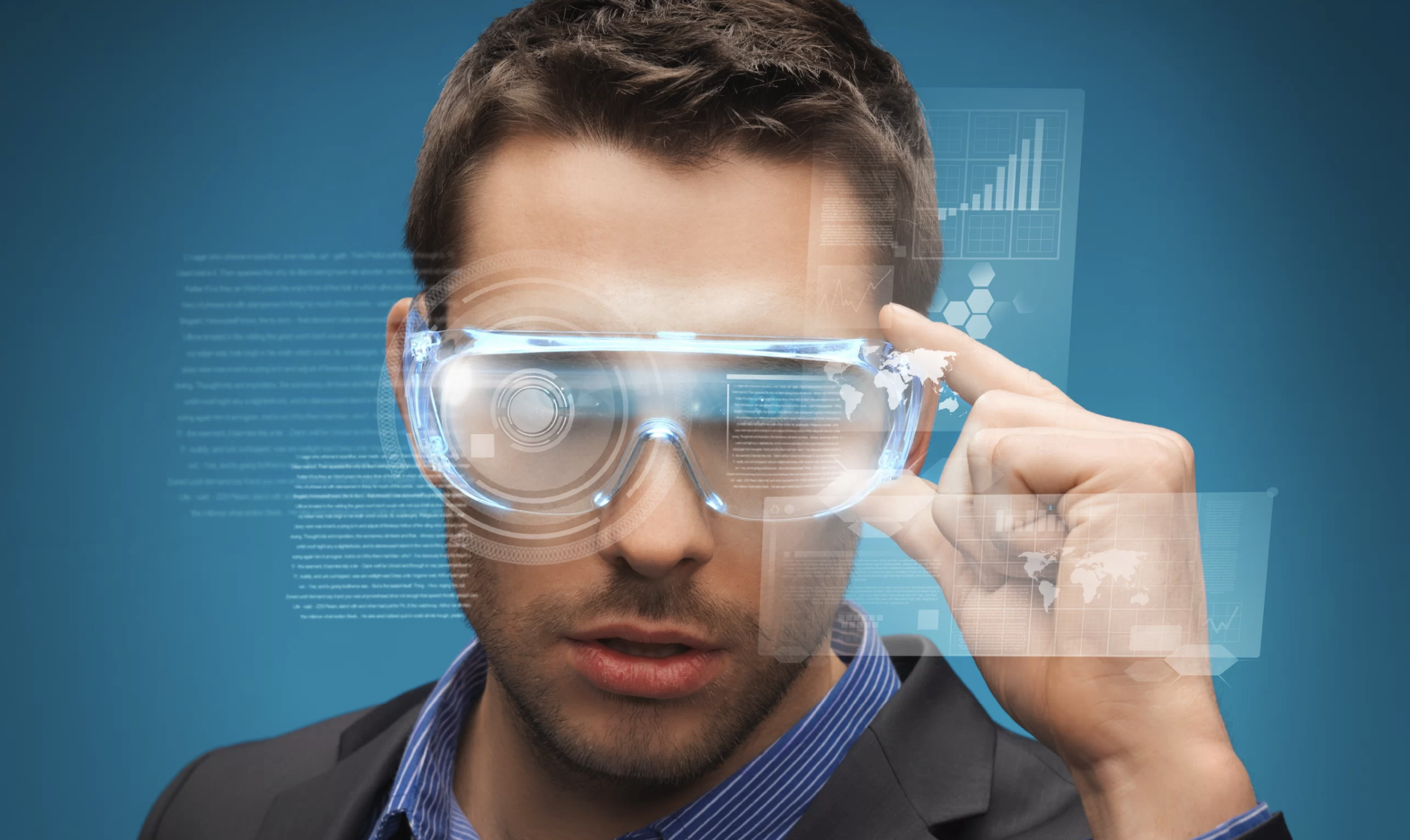
- Display-equipped smart glasses overlay digital information directly onto the wearer’s field of view, the category most associated with true augmented reality
- Full AR glasses aim to blend digital content convincingly with the physical world, though this remains the least mature segment of the category
This range means “smart glasses” isn’t really a single product category with consistent expectations, and comparing a pair of audio-only glasses to a full AR display device involves comparing different technologies aimed at different use cases entirely.
The Core Technical Challenges Holding Back True AR Glasses
Despite significant investment from major technology companies, several persistent technical challenges have prevented display-equipped AR glasses from achieving mainstream, all-day usability.
- Battery life remains a significant constraint, since power-hungry displays and processors drain small, glasses-sized batteries quickly
- Display brightness and field of view involve trade-offs, with wider, brighter displays generally requiring bulkier hardware
- Heat dissipation in a device worn directly against the face limits how much processing power can be packed into a comfortable form factor
- Achieving a socially acceptable, ordinary-looking design while housing all this technology remains a difficult engineering balance
These aren’t minor engineering inconveniences they represent fundamental physics and materials science challenges that explain why progress in this category, while real, has been slower than early industry predictions suggested it would be.
How Smart Glasses Handle Privacy Concerns
Camera-equipped smart glasses in particular have raised persistent privacy concerns, both for wearers and for people around them who may not realize they’re being recorded.
- Visible recording indicators, such as a small light, have become a common design response to public concern about covert recording
- Some venues and businesses have implemented policies restricting or banning smart glasses with cameras on their premises
- Manufacturers have faced ongoing public and regulatory pressure to build stronger privacy safeguards into these devices
- Public perception of camera-equipped wearables remains notably more cautious than perception of a smartphone camera, despite functional similarities
This privacy tension hasn’t been fully resolved industry-wide, and it remains one of the more significant social, rather than purely technical, obstacles facing broader adoption of camera-equipped smart glasses specifically, separate from the audio-only or display-only segments of the category.
Current Practical Use Cases That Work Well
While full AR remains a work in progress, certain smart glasses use cases have matured into useful, reliable functionality available today.
- Audio playback and hands-free calling, allowing music and calls without headphones blocking situational awareness
- Basic turn-by-turn navigation prompts displayed subtly without requiring a phone to be held or checked
- Voice assistant integration, allowing hands-free queries and commands throughout the day
- First-person photo and video capture for activities where holding a phone or camera is impractical
These more modest, currently reliable use cases represent where smart glasses technology has found product-market fit today, even as the more ambitious full AR display capabilities that dominate marketing narratives remain further from mainstream, all-day practical use.
Comparing Smart Glasses to Smartphone-Based AR
Augmented reality experiences aren’t exclusive to dedicated glasses smartphone cameras have delivered AR features for years, and the comparison clarifies what dedicated glasses add beyond an existing device most people already carry.
- Smartphone AR requires holding up and looking through a phone screen, an inherently more awkward interaction than a hands-free glasses display
- Dedicated AR glasses offer a more immersive, continuous experience without needing to hold a device up to view digital overlays
- Smartphone AR benefits from far more processing power and battery capacity than a comparable glasses form factor could support
- Glasses-based AR remains behind smartphone AR in raw display quality and processing capability, despite its interaction advantages
This trade-off between hands-free convenience and raw technical capability is central to why smart glasses haven’t yet replaced smartphone-based AR experiences for most current use cases, even though the interaction model advantage is significant for certain applications.
The Role of Major Technology Companies in Shaping the Category
Several major technology companies have made significant, sustained investments in smart glasses and AR technology, and their continued involvement has been a key factor in the category’s gradual maturation.
- Sustained, multi-year investment from well-resourced companies has kept the category advancing despite slower-than-predicted progress
- Competition between major players has accelerated improvements in display technology, battery efficiency, and industrial design
- Developer ecosystems and software platforms built around specific glasses products are still relatively early and fragmented across manufacturers
- Enterprise and industrial applications, such as hands-free technical work instructions, have often matured faster than consumer-focused use cases
This sustained corporate investment suggests the category isn’t likely to fade away despite its slower-than-hyped progress, though predicting exactly when true all-day AR glasses become mainstream remains difficult given how many fundamental technical challenges still remain unresolved.
What Realistic Expectations Look Like Going Forward
Given the current state of the technology, setting realistic expectations about the near-term future of smart glasses helps separate progress from overly optimistic marketing narratives.
- Audio and camera-focused smart glasses without full displays are likely to see continued, steady mainstream adoption growth
- Full-featured AR display glasses suitable for all-day wear likely remain several years away from mainstream consumer availability
- Enterprise and specialized industrial applications will likely continue adopting AR glasses technology faster than general consumers
- Incremental improvements in battery life, display quality, and design will likely continue gradually rather than through a single dramatic breakthrough
Approaching the category with this more measured expectation, rather than the more dramatic promises that have characterized some marketing in this space, provides a more accurate picture of where the technology stands and where meaningful near-term improvement is realistically likely to occur.
How Smart Glasses Handle Sound Without Traditional Speakers
Audio delivery in smart glasses presents unique engineering challenges compared to traditional headphones, since the form factor doesn’t easily accommodate the same speaker technology, and manufacturers have developed several distinct approaches to solve this.
- Open-ear audio designs direct sound toward the ear canal without physically blocking it, preserving situational awareness
- Bone conduction technology transmits sound through vibrations in the skull rather than through the air into the ear canal
- Directional audio technology attempts to minimize sound leakage audible to people standing nearby
- Battery and processing constraints limit how sophisticated the audio processing in a glasses form factor can practically be
These approaches each involve trade-offs between audio quality, privacy from nearby sound leakage, and comfort, and the right choice depends on intended use, with situational awareness generally prioritized over pure audio fidelity in most current smart glasses designs.
Enterprise and Industrial Adoption Ahead of Consumer Use
Smart glasses have found more immediate, practical traction in enterprise and industrial settings than in general consumer adoption, and why illuminates where the technology currently delivers the clearest return on investment.
- Hands-free access to technical documentation and instructions benefits workers performing complex physical tasks
- Remote expert assistance, where a specialist can see what a field worker sees and provide real-time guidance, has proven valuable
- Quality control and inspection applications benefit from AR overlays highlighting specific areas needing attention
- Enterprise buyers are often more willing to tolerate current limitations, like shorter battery life, given clear productivity gains in specific tasks
This enterprise-first adoption pattern is fairly common for new hardware categories, where specific, high-value use cases justify current limitations well before the broader consumer market reaches a similar cost-benefit threshold for everyday use.
How Smart Glasses Are Adapting to Different Face Shapes and Needs
Fit and comfort have historically been underappreciated challenges in smart glasses design, since unlike a phone or watch, glasses need to comfortably accommodate an enormous range of face shapes and sizes for extended daily wear.
- Manufacturers have gradually expanded available frame sizes and styles beyond a single one-size-fits-most default option
- Weight distribution engineering has improved to reduce discomfort during extended wear compared to earlier, front-heavy designs
- Compatibility with existing prescription needs remains an ongoing area of development across different manufacturers
- Accessibility considerations for users who don’t typically wear glasses at all represent a distinct design challenge from adapting existing eyewear wearers
This fit and comfort dimension matters enormously for a product category explicitly designed for all-day wear, and it’s an area where, measurable progress is still ongoing even as the more headline-grabbing display and processing capabilities receive most public attention.
Comparing Smart Glasses to Smartwatches as a Wearable Category
Smart glasses are sometimes compared to the smartwatch category’s own maturation journey, and this historical comparison offers a useful, if imperfect, lens for thinking about where smart glasses might be headed next.
- Smartwatches took a similarly gradual path from early, limited devices toward useful, mainstream daily wearables
- Battery life, a persistent early smartwatch limitation, improved gradually over successive product generations rather than through one breakthrough
- Software ecosystem maturity took longer to develop for smartwatches than the underlying hardware capability alone
- Consumer adoption patterns for smartwatches suggest smart glasses may similarly need several more product generations before broad mainstream adoption
While the comparison isn’t perfect, given different technical and social challenges specific to a face-worn display device, the smartwatch category’s gradual maturation offers a reasonable template for the kind of incremental, multi-generation progress smart glasses are likely to continue following.
The Social Acceptance Challenge Facing Wearable Cameras
Beyond the technical and privacy challenges already facing camera-equipped smart glasses, broader social acceptance remains a significant hurdle that technical improvements alone won’t fully resolve.
- Public awareness and comfort with wearable cameras has grown gradually but remains more cautious than acceptance of smartphone cameras
- Design choices that make devices look more like ordinary glasses have helped somewhat but haven’t fully eliminated public wariness
- Cultural and generational differences in comfort with wearable recording technology remain significant across different communities
- Industry and manufacturer transparency about data handling practices plays a meaningful role in shaping broader public trust over time
This social dimension is likely to evolve more slowly and less predictably than the underlying technology itself, since it depends on broader cultural attitudes and trust-building that don’t necessarily track in step with technical capability improvements.
How Battery Technology Improvements Could Change the Category’s Trajectory
Battery technology remains one of the most significant constraints on smart glasses capability, and meaningful improvements in this specific area could unlock more ambitious designs than currently possible.
- Solid-state battery research, if it matures for consumer applications, could improve energy density in compact form factors
- Improved power efficiency in specialized display and processing chips reduces overall battery demand independent of battery technology itself
- Some designs have explored offloading processing to a paired device specifically to reduce onboard battery demand
- Incremental battery life improvements have already expanded practical daily usage compared to earlier device generations
Tracking battery technology progress specifically, separate from more publicized display and AI capability announcements, offers a useful indicator of when more ambitious, all-day AR glasses designs might become practically achievable rather than remaining a demo-only capability.
The Influence of Fashion and Eyewear Brands Entering the Category
Traditional eyewear and fashion brands partnering with technology companies has become an increasingly common strategy for improving smart glasses’ aesthetic appeal and social acceptability, addressing a design challenge that purely technology-focused companies have sometimes struggled with on their own.
This collaboration brings eyewear design expertise, developed over decades of solving comfort and style challenges, into a product category where that specific expertise had previously been underrepresented relative to the technical engineering focus dominating earlier device generations.
Final Thoughts
Smart glasses have made, measurable progress from their earlier, more awkward iterations, even if the fully immersive AR experience promised in marketing narratives remains further off than some predictions suggested. The more modest, currently reliable use cases audio, navigation, hands-free photography already deliver real value today, while the more ambitious display-based AR future continues advancing steadily rather than arriving in one dramatic leap.
Frequently Asked Questions
Are smart glasses with displays available to buy today?
Some display-equipped smart glasses are commercially available, though most current models offer more limited display capabilities, such as simple text notifications or basic navigation prompts, rather than the fully immersive AR overlay experience often depicted in more speculative marketing and concept videos.
How much do smart glasses typically cost?
Pricing varies by capability, from more affordable audio-only or camera-focused glasses in the low hundreds of dollars, up to more expensive display-equipped or developer-focused AR glasses that can run well into four figures depending on the specific technology involved.
Can smart glasses be used with regular prescription lenses?
Many smart glasses manufacturers now offer prescription lens options or compatibility with prescription inserts, though availability and cost vary by manufacturer, and this is worth confirming directly before purchasing if prescription correction is needed.
Do smart glasses work independently or do they require a smartphone?
This varies by device. Many current smart glasses rely on a paired smartphone for full functionality, processing, and connectivity, while some more advanced or higher-end models include enough onboard processing and connectivity to operate with greater independence from a paired phone.
How long does the battery typically last on smart glasses?
Battery life varies based on the specific features being used, with audio-only glasses generally lasting longer per charge than display-equipped models running more power-intensive processing and visual output throughout the day.
Is there a risk that smart glasses technology becomes obsolete quickly given how fast it’s evolving?
This is a consideration given how quickly the category is evolving, and buyers should weigh this against the value they expect to get from current capabilities, similar to how early smartphone buyers weighed rapid annual improvements against the value of the device they were purchasing in the moment.