When Singapore built a full digital replica of the entire city-state, down to individual buildings, underground utility lines, and traffic patterns, urban planners could test how a proposed new transit line would affect congestion years before a single shovel hit the ground. The simulation wasn’t a static 3D model sitting on a shelf; it ingested live sensor data from traffic cameras and weather stations, updating continuously so planners were working with something close to a real-time mirror of the physical city.
That project, known as Virtual Singapore, is one of the most ambitious examples of a digital twin, but the same underlying idea now shows up in jet engines, factory floors, and even individual human hearts modeled for surgical planning.
From Static Models to Living Simulations
A digital twin is a software representation of a physical object or system that stays synchronized with its real-world counterpart through continuous data feeds, distinguishing it sharply from a traditional CAD model or simulation that captures a design at a single point in time.
NASA is often credited with the earliest practical use of the concept, running detailed simulations of spacecraft systems on the ground so engineers could diagnose problems and test fixes without needing physical access to a vehicle already in orbit, a necessity that became famous during the Apollo 13 crisis when ground teams worked through solutions using systems that mirrored the damaged spacecraft. Modern digital twins extend well past aerospace, and the defining trait across every implementation is the same continuous feedback loop connecting the physical and digital versions of a system:
- Live data ingestion: sensors on the physical object continuously feed telemetry into the digital model, keeping it current rather than a snapshot.
- Bidirectional influence: insights from the digital twin can inform changes to the physical system, and changes to the physical system update the twin in turn.
- Predictive capability: because the twin reflects current real-world state, it can simulate forward in time to forecast wear, failure, or performance under different conditions.
- Historical record: the twin often retains a history of past states, letting engineers trace how a system’s condition evolved over time.
Manufacturing as the Proving Ground
Industrial manufacturing has embraced digital twins faster and more broadly than almost any other sector, largely because the return on investment is easy to measure in terms of downtime avoided and defects caught before they reach a customer.
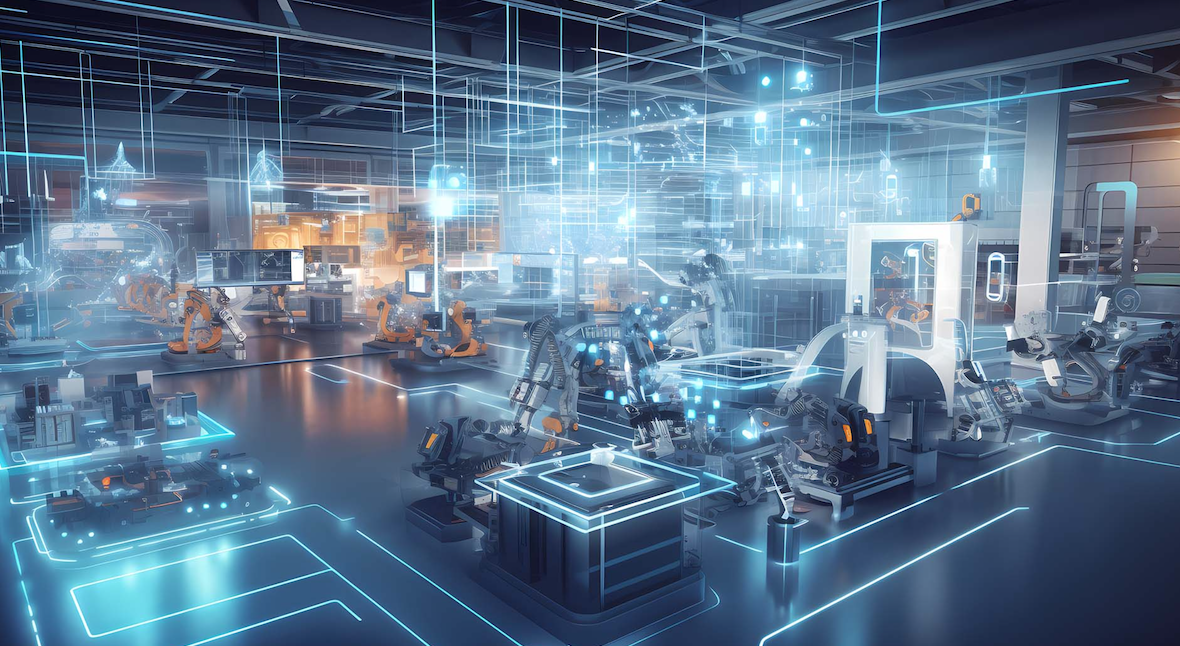
Siemens, General Electric, and Rolls-Royce have each built digital twin platforms for their equipment, letting customers monitor a jet engine or an industrial turbine’s digital counterpart to catch early signs of wear that wouldn’t be visible through routine physical inspection alone. A factory-level digital twin typically models an entire production line rather than a single machine, simulating how a change to one station ripples through the rest of the process before that change is ever made on the physical floor.
This lets manufacturing engineers test layout changes, new equipment configurations, or adjusted production schedules in software first, catching bottlenecks and inefficiencies that would be expensive and disruptive to discover through trial and error on an actual assembly line. BMW has used exactly this approach to plan new factory layouts entirely in simulation before construction begins, compressing what used to be a lengthy physical trial-and-error process into a much faster iterative design cycle run almost entirely in software.
Automotive suppliers further down the chain have followed the same pattern at a smaller scale, using digital twins of individual production cells to fine-tune robotic arm movements and reduce cycle times before ever touching the physical hardware. The payoff compounds across a large enough operation, since even a small percentage improvement in cycle time or defect rate, multiplied across a full production run, can translate into savings that dwarf the cost of building the simulation in the first place.
Predictive Maintenance and Failure Forecasting
One of the clearest financial arguments for digital twins comes from predictive maintenance, where a synchronized digital model helps predict when a physical component is likely to fail, replacing scheduled maintenance intervals with condition-based interventions timed to real wear rather than a fixed calendar.
Airlines have applied this to jet engines with particular success, since an unplanned engine failure grounding a flight is enormously more expensive and disruptive than a maintenance check scheduled a few weeks ahead of when a digital twin’s model predicts a component will need attention. The financial case for predictive maintenance built on a digital twin rests on a few consistent advantages over traditional scheduled maintenance:
- Reduced unplanned downtime: catching developing problems before they cause a failure avoids the disruption of an unexpected shutdown.
- Lower maintenance costs overall: replacing parts based on actual wear rather than a fixed schedule avoids both premature replacement and risky over-extension.
- Better spare parts planning: knowing roughly when a component will need replacement lets a company order parts and schedule labor well in advance.
- Longer equipment lifespan: catching small issues early often prevents the kind of cascading damage that shortens a machine’s overall usable life.
Healthcare Applications Taking Shape
Medicine has become an unexpected but fast-growing arena for digital twin technology, applying the same core concept, a continuously updated digital model synchronized with a real-world counterpart, to the human body instead of a machine.
Cardiac digital twins built from a patient’s own imaging data let surgeons simulate how a specific heart would respond to different surgical approaches before making a single incision, a capability that has already influenced surgical planning for complex congenital heart defects where the anatomy varies enough between patients that a generic approach carries real risk.
Pharmaceutical companies have started building digital twins of clinical trial populations, simulating how a drug might perform across a virtual patient population to help design more efficient trials and identify likely responders before recruiting real participants.
Philips, Siemens Healthineers, and a growing roster of health tech startups have each invested in digital twin platforms aimed at hospitals, ranging from whole-organ simulation down to digital models of individual medical devices implanted in a patient, monitored continuously for early signs of malfunction that wouldn’t be caught during a routine checkup.
Urban Planning and Infrastructure at Scale
City-scale digital twins like Virtual Singapore represent the most ambitious end of the spectrum, modeling entire urban environments with enough fidelity to simulate traffic flow, energy consumption, and even the microclimate effects of a proposed new building on surrounding streets. These projects require an enormous amount of coordinated sensor infrastructure, drawing on traffic cameras, air quality monitors, utility meters, and satellite imagery to keep the digital model synchronized with a constantly changing physical city.
Funding and political will vary widely between these projects, and not every city that starts one sees it through to a fully operational state, since the ongoing cost of maintaining live sensor feeds and updating the model tends to be underestimated at the outset. Several cities beyond Singapore have pursued similar projects at varying scales:
- Helsinki: built a detailed 3D digital twin used for energy planning and testing how new construction would affect solar access for existing buildings.
- Shanghai: developed a citywide digital twin integrated with traffic management systems to optimize signal timing in real time.
- Orlando: created a digital twin focused specifically on stormwater management and flood risk modeling for city infrastructure planning.
- Cambridge, UK: uses a digital twin for utility infrastructure planning, coordinating underground works between different utility providers to reduce repeated road excavation.
Technical Infrastructure Behind the Concept
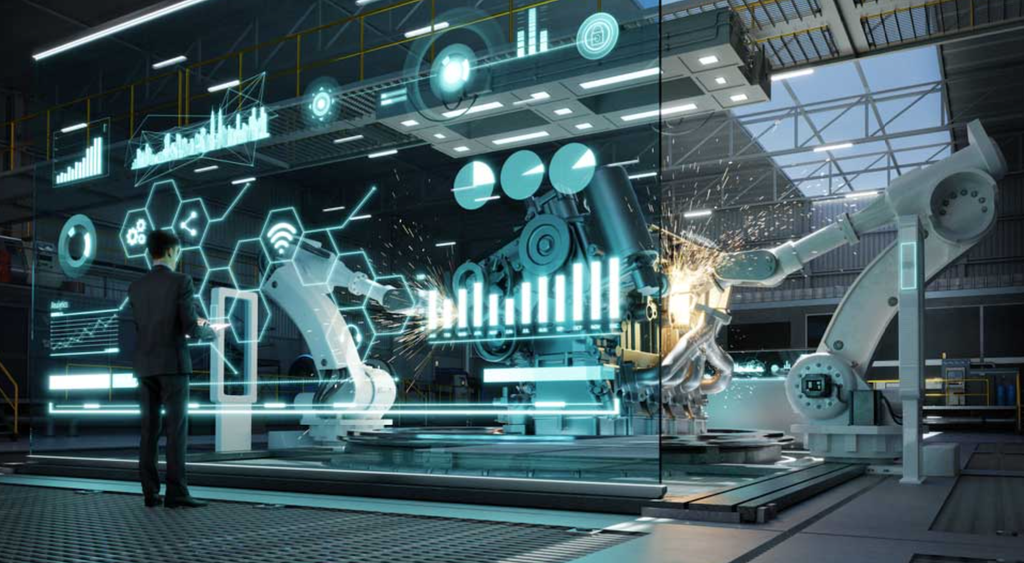
Building and maintaining a digital twin at any meaningful scale requires infrastructure most organizations don’t have sitting around unused, which is why the technology has taken longer to reach smaller companies than the largest industrial players. A functioning digital twin needs reliable sensor networks generating continuous data, a data pipeline capable of ingesting and processing that data quickly enough to keep the model current, and computing infrastructure powerful enough to run the underlying physics or statistical simulations without lagging noticeably behind real-world events.
Cloud providers have moved aggressively into this space specifically to lower that barrier. Microsoft’s Azure Digital Twins, AWS IoT TwinMaker, and similar offerings package much of the underlying infrastructure, sensor integration, data pipelines, and simulation tooling, into a managed service that smaller manufacturers and municipalities can adopt without building everything from scratch.
That shift mirrors a broader pattern in enterprise software, where capabilities once reserved for companies with massive internal engineering teams have gradually become accessible to a wider range of organizations as cloud platforms absorb more of the underlying complexity. Simulation engines borrowed from other industries have also found a second life powering digital twins.
Gaming and visualization companies like NVIDIA and Unity have repositioned parts of their real-time rendering and physics engines specifically for industrial digital twin use cases, since the same technology built to render a convincing virtual world for a video game turns out to be well suited to visualizing a factory floor or a city block with enough fidelity for engineers to interpret at a glance.
NVIDIA’s Omniverse platform is one of the more visible examples, marketed directly at industrial customers building large-scale digital twins rather than at game developers, a repurposing of consumer technology that has become a recurring pattern across the digital twin space.
Limits Worth Acknowledging
Digital twins aren’t a universal solution, and the hype surrounding the term has occasionally outpaced what the technology can reliably deliver, especially for organizations without the sensor infrastructure or data quality needed to keep a model closely synchronized with reality.
A digital twin built on sparse or unreliable sensor data can produce confident-looking predictions that fail to reflect the physical system’s true condition, which is arguably worse than having no digital twin at all, since a false sense of certainty can lead to skipped inspections or delayed maintenance that a more honest assessment would have caught.
Cost and complexity remain real barriers too. Building a digital twin sophisticated enough to be useful, rather than a superficial 3D visualization dressed up with marketing language, requires domain expertise in both the physical system being modeled and the software engineering needed to keep the model synchronized, a combination that’s harder to find and more expensive to hire than either skill set alone.
Organizations evaluating a digital twin project need to be honest about whether their use case justifies that investment or whether a simpler monitoring dashboard would deliver most of the practical benefit at a fraction of the cost and complexity.
Supply Chain and Logistics Adoption
Beyond factories and individual machines, digital twins have found a strong foothold in supply chain and logistics operations, where a synchronized model of an entire network of warehouses, transport routes, and inventory levels helps planners react to disruptions faster than a traditional dashboard of historical reports ever could.
A logistics digital twin ingests data from shipment tracking systems, warehouse sensors, and even external inputs like weather and port congestion reports, letting planners simulate how a delayed shipment or a closed port would ripple through the rest of the network before it happens for real.
Retailers and consumer goods companies have leaned on this capability especially during periods of supply chain volatility, using a digital twin to test contingency plans, such as rerouting shipments through an alternate port or shifting production between facilities, entirely in simulation before committing to a costly change on the ground. A few concrete benefits have driven adoption in this space:
- Faster disruption response: simulating alternate routes or suppliers in software cuts the time needed to react to a real-world supply chain shock.
- Inventory optimization: a synchronized model of stock levels across a network helps identify where inventory is misallocated before a stockout or overstock situation develops.
- Scenario planning: companies can test the impact of a new supplier, a factory closure, or a shipping route change without disrupting actual operations.
- Cross-functional visibility: a shared digital twin gives procurement, logistics, and sales teams a common, continuously updated view of the same underlying data.
Unilever and Procter & Gamble have both discussed building supply chain digital twins spanning their global manufacturing and distribution networks, treating the technology as a strategic tool for resilience planning rather than a narrow operational dashboard confined to a single facility.
Final Thoughts
Digital twins turn the old idea of a static blueprint into something closer to a living mirror of the physical world, continuously updated and capable of forecasting problems before they happen rather than just documenting how a system was designed. The technology has proven its worth clearly in manufacturing and aerospace, where predictive maintenance alone justifies the investment, and it’s expanding steadily into healthcare, urban planning, and other domains where a synchronized digital model offers a real practical edge.
It isn’t a fit for every organization, and building one that delivers reliable insight takes real sensor infrastructure and specialized expertise that not every company has on hand. For the organizations that can support it, though, a digital twin turns physical systems into something that can be tested, forecasted, and improved in software long before any change touches the real world.
Read more about TechNewWeb
Frequently Asked Questions
How is a digital twin different from a regular simulation?
A traditional simulation typically models a system based on a fixed set of assumptions at one point in time, while a digital twin stays continuously synchronized with its physical counterpart through live sensor data. That ongoing connection lets a digital twin reflect the actual current state of a system rather than a static or hypothetical scenario.
Which industries use digital twins the most?
Manufacturing, aerospace, and energy have been the earliest and heaviest adopters, largely because the cost of equipment failure or downtime in those industries is high enough to justify the investment. Healthcare and urban planning have followed more recently as sensor technology and cloud computing infrastructure have become more accessible.
Do small businesses use digital twin technology?
Adoption among small businesses remains limited, mostly due to the sensor infrastructure and technical expertise required to build and maintain a useful digital twin. Cloud platforms offering managed digital twin services have started lowering that barrier, but the technology still skews toward larger organizations with the resources to invest in it.
Can a digital twin predict equipment failure before it happens?
Yes, this is one of the technology’s most common applications, known as predictive maintenance, where the digital model forecasts wear and potential failure based on real-time sensor data rather than a fixed maintenance schedule. Accuracy depends heavily on sensor quality and how well the underlying model reflects the physical system’s actual behavior.
Are digital twins used outside of engineering and manufacturing?
Yes, digital twin concepts have expanded into healthcare, urban planning, supply chain logistics, and even sports performance analysis, where an athlete’s biomechanics might be modeled to optimize training. The core idea, a continuously synchronized digital model of a physical system, applies wherever real-time data and predictive simulation offer a practical benefit.
What does it cost to build a digital twin?
Costs vary enormously depending on scale, ranging from a relatively modest investment for a single piece of equipment to massive, multi-year programs for something like a citywide digital twin. Sensor infrastructure, data pipeline development, and ongoing maintenance of the simulation model typically make up the bulk of the expense over time.