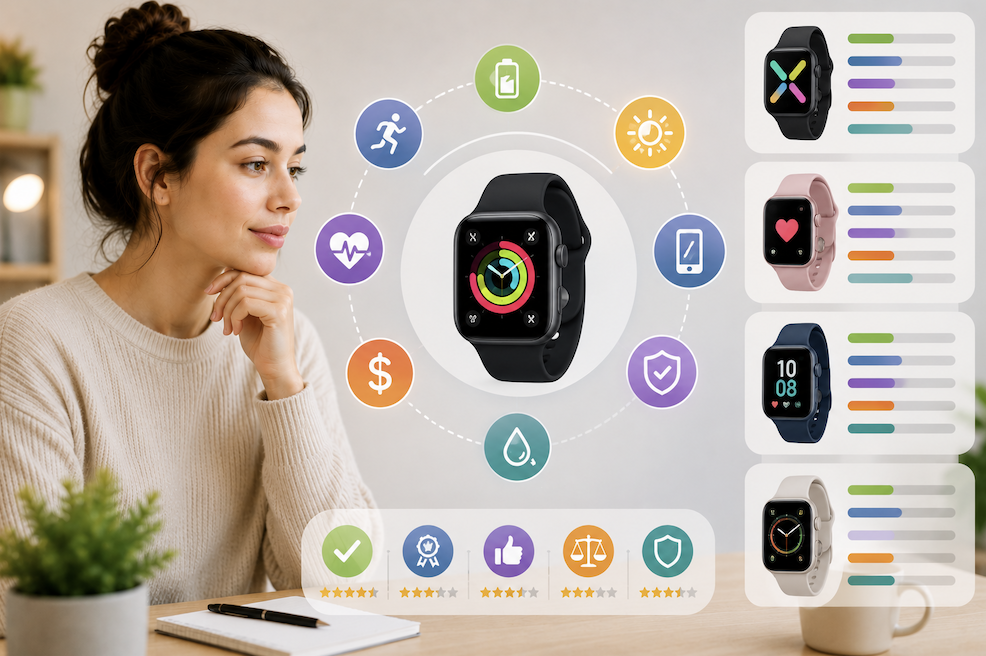
Budget smartwatches have improved dramatically, narrowing the gap with premium models in most everyday features. Rather than focusing on brand names, understanding which specific features matter for your actual use case makes it far easier to pick the right budget option. Here’s what to prioritize.
Understanding Sensor Placement and Fit
How snugly a smartwatch fits against the wrist directly affects heart rate sensor accuracy, more so than most buyers expect. A band worn too loosely allows light to leak around the sensor and reduces reading accuracy, particularly during movement. Adjusting the band slightly snugger during exercise specifically, then loosening it for everyday comfort afterward, is a simple habit that improves tracking accuracy regardless of which specific watch you choose.
Start With Phone Compatibility
Before evaluating any specific features, confirm the smartwatch is fully compatible with your phone’s operating system. Some budget smartwatches work across both major mobile platforms but offer a reduced feature set on one compared to the other, so it’s worth checking compatibility details specifically for the features you care about most, rather than assuming general compatibility means full feature support.
Health and Fitness Tracking: Managing Expectations
Budget smartwatches generally include heart rate monitoring, step counting, and sleep tracking, but accuracy can vary more than at the premium tier, particularly for heart rate readings during intense exercise. For casual daily tracking, general activity levels, rough sleep patterns, budget sensors are generally reliable enough. For anyone training seriously or relying on precise heart rate zones for structured workouts, it’s worth reading reviews that specifically test tracking accuracy rather than assuming all smartwatches perform similarly in this area.
Sleep Tracking: What Budget Sensors Can and Can’t Tell You
Budget smartwatches can reasonably estimate total sleep duration and rough movement patterns throughout the night, but detailed sleep stage breakdowns (light, deep, REM) tend to be less precise at this price tier compared to premium models with more advanced sensors. For general awareness of sleep habits and consistency, budget tracking is generally useful; for anyone seriously investigating a specific sleep concern, this data is better treated as a rough guide than a clinical-grade measurement.
Battery Life: Reading Between the Marketing Numbers
Advertised battery life often reflects a specific, sometimes limited-use scenario, and real-world battery life with continuous heart rate tracking, notifications, and display use tends to be shorter than the marketed figure. Watches with simpler displays or basic always-on functionality typically achieve battery life closer to their advertised numbers than those with a bright, full-color always-on display, which draws considerably more power.
Charging Convenience
Charging methods vary between models, with some using a magnetic puck or clip and others requiring the watch to sit in a cradle-style dock. A magnetic clip charger is generally more convenient for travel, since it’s smaller and less prone to misalignment compared to a dock, which can occasionally fail to charge properly if the watch isn’t seated exactly right overnight.
Display Types: AMOLED vs LCD
AMOLED displays offer richer colors, deeper blacks, and better visibility in direct sunlight, but consume more battery, particularly with an always-on display enabled. LCD displays are generally more battery-efficient but offer less vibrant colors and can be harder to read in bright outdoor conditions. For outdoor exercise use, prioritizing sunlight visibility often matters more than color vibrance; for general everyday wear, either display type is reasonably sufficient.
Durability for Active Lifestyles
For anyone who exercises frequently or works in physically demanding conditions, checking the watch’s scratch resistance rating and overall build durability matters beyond just water resistance. A watch with a more scratch-resistant display material holds up better over daily wear during activities like weightlifting or outdoor work, where the screen faces more incidental contact than during typical desk-based daily use.
Water Resistance for Swimming and Showering
Water resistance ratings vary meaningfully between budget models, and it’s worth checking the specific rating rather than assuming any “water-resistant” label covers swimming. A rating suitable for splashes and rain doesn’t necessarily mean the watch can handle submersion during swimming, so checking for a specific swim-rated certification is important if that’s a planned use case.
Comparing Onboard vs Companion-App-Dependent Features
Some budget smartwatches offload most of their functionality to the companion phone app, meaning features feel sluggish or limited when the phone isn’t nearby, while others handle more processing directly on the watch itself. If you frequently exercise or go about your day without your phone, checking how much a specific model depends on an active phone connection for core features avoids the disappointment of a watch that feels significantly less capable without its paired phone close by.
Notifications and Call Handling
Most budget smartwatches handle basic notification mirroring texts, calls, and app alerts reasonably well, but built-in speakers and microphones for taking calls directly on the watch are less consistent in quality at the budget tier. If handling calls directly from the watch is a priority, checking specifically for call quality in reviews, rather than assuming the feature works as well as texting notifications, avoids disappointment after purchase.
Band Comfort and Material
The included band’s material affects comfort more than most buyers expect before wearing a smartwatch daily. Silicone bands are the most common, affordable, and generally comfortable for exercise and daily wear, though some people find them less breathable over long wear periods compared to woven or perforated alternatives. Checking whether a watch uses a standard band size, allowing for aftermarket replacement bands, adds flexibility if the included band doesn’t suit your preference long-term.
Software Support and Update Longevity
Unlike phones, smartwatch software support timelines are less consistently publicized, and budget models sometimes receive fewer long-term updates than premium counterparts. Checking a manufacturer’s update history for previous models, where available, gives a reasonable indication of how long you can expect ongoing software support for a new purchase.
GPS: Built-In vs Connected
Some budget smartwatches include built-in GPS, allowing accurate location tracking for outdoor runs or hikes without needing your phone nearby. Others rely on “connected GPS,” using your paired phone’s location data instead, which requires carrying your phone during the activity for accurate tracking. If tracking outdoor activities without your phone is a priority, confirming built-in GPS specifically, rather than assuming all smartwatches include it, is an important check before buying.
Common Budget Compromises Worth Knowing About
Budget smartwatches often compromise on companion app polish and third-party app support compared to premium models, meaning fewer available watch faces, less robust health data analysis, and sometimes a clunkier setup process. These compromises don’t necessarily affect core functionality but are worth expecting rather than being surprised by after purchase.
Storage and Music
Some budget smartwatches include onboard storage for music, allowing workouts without carrying a phone, while others require a connected phone for any audio playback. If phone-free workouts with music are a specific goal, checking for onboard storage and offline playback support specifically is worth verifying rather than assuming it’s a standard feature across all models.
Comparing Screen Protection and Case Materials
Case materials range from lightweight plastic to aluminum or stainless steel, affecting both durability and how premium a watch feels day to day. Stainless steel generally offers better scratch resistance and a more polished appearance but adds weight, while aluminum or plastic cases prioritize lighter, more comfortable all-day wear, particularly noticeable during workouts or extended wear periods.
Reading Smartwatch Reviews Effectively
When comparing budget models, prioritize reviews that specifically mention extended real-world use several weeks or months over first-impression reviews written shortly after unboxing. Battery degradation, sensor accuracy drift, and software update reliability are all issues that typically only become apparent after extended daily wear, and a watch that impresses in the first few days can still disappoint months later if these longer-term factors weren’t part of the original review.
Comparing App Ecosystem Support
Some budget smartwatches support installing additional third-party apps directly, while others are limited to a fixed set of built-in watch faces and functions with no expansion beyond what shipped originally. If future flexibility matters to you, checking whether a model supports any form of app installation, even a limited one, is worth confirming before purchase rather than discovering the limitation later.
Considering Warranty and Support Policies
Budget electronics sometimes come with shorter or more limited warranty coverage than premium counterparts, so checking the specific warranty length and what it covers, particularly for battery performance issues that tend to develop gradually rather than as a sudden failure, is worth doing before purchase rather than after a problem has already appeared.
Considering Total Cost of Ownership
Beyond the upfront purchase price, factor in the cost of replacement bands, potential battery replacement or device replacement once the built-in battery degrades (since most smartwatches don’t support user-replaceable batteries), and any subscription costs for advanced health features some platforms charge for separately. A slightly higher upfront cost for a model with better long-term software support can sometimes represent better overall value than the cheapest available option.
Conclusion
For most budget smartwatch shoppers, prioritizing realistic battery life expectations, confirming full compatibility with your specific phone, and checking water resistance and GPS specifics for your intended activities will matter more day-to-day than chasing the most feature-packed spec sheet. Reading reviews that test real-world tracking accuracy and battery life, rather than relying on marketed figures alone, gives the clearest picture of whether a specific model fits your needs.
- Read more about Technewweb!