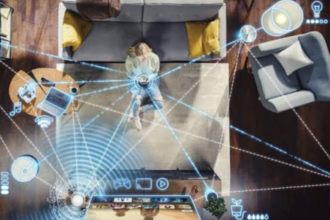
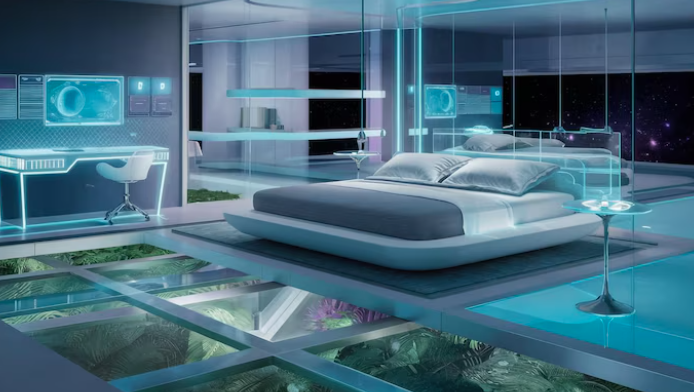
The divide between technology and interior design has officially closed. The cluttered era of exposed wires and obtrusive devices is over. By 2026, smart home technology has evolved into an invisible fabric integrated into our environments, enhancing daily life without ever disrupting it. Modern high-tech homes prioritize subtle integration-where innovation lives within the walls, furniture, and materials themselves, creating environments that are both profoundly intelligent and deeply human.
Smart Glass: Windows That Adapt

Floor-to-ceiling windows no longer require curtains or blinds. With smart switchable glass, homeowners can instantly toggle between crystal clarity and soft frosted opacity using a voice command or discreet touch panel. This innovation safeguards panoramic vistas and sunlight while enabling immediate seclusion, upholding pure architectural contours and fundamentally redefining our relationship with openness within the home.
Dynamic Digital Art & Living Walls

Static art is giving way to living, breathing displays. In their resting state, Micro-LED surfaces emulate the texture of canvas, linen, or stone, only to transform-upon command-into portals for vibrant digital art, serene immersive landscapes, or dynamic personal galleries. Alongside these, self-sustaining living walls integrate automated hydration and climate monitoring, blending biophilic beauty with sensor-driven care. Together, they turn walls into organic, evolving focal points.
Hidden Interfaces: Control at a Touch

Remotes and wall-mounted panels are disappearing. In their place, embedded touch surfaces allow residents to control lighting, climate, and entertainment by simply touching a wooden panel, tracing a line on a marble accent, or gesturing near a responsive surface. Voice assistants respond naturally within room acoustics, and holographic or projected interfaces appear only when needed-making interaction intuitive and invisible.
Adaptive, Robotic Furniture

Furniture now actively responds to our lives. With silent integrated robotics, sofas adjust firmness based on posture, dining tables rise to become workstations, and beds track sleep patterns to optimize support through the night. These adaptive pieces allow rooms to serve multiple purposes-transforming a home office into an entertainment lounge or a guest room into a meditation space-maximizing both square footage and daily functionality.
A New Standard of Home Harmony

The 2026 high-tech home achieves what once seemed contradictory: a space that feels warm, textured, and personal, yet operates with precision and awareness. By embedding technology into the very fabric of design-from responsive windows to conscious furniture-these homes don’t look futuristic. They feel timeless, responsive, and effortlessly in tune with the rhythms of the people who live there. This isn’t just smart living; it’s living, intelligently elevated.