Discover forced authorization codes in telephony and payments learn practical setups, avoid risks, and strengthen security with real-world examples and current best practices.
Key Takeaways
- Master both contexts: Grasp forced authorization codes in Cisco CUCM telephony and credit card payments to sidestep pitfalls others overlook.
- Risk-reduction tips: Practical steps that help merchants handle overrides safely, addressing chargeback concerns highlighted in recent industry reports.
- Current integrations: Insights on pairing with modern tools like Webex Calling, based on latest Cisco configurations.
- Privacy-focused management: Approaches to code handling that respect user needs, like adjusting timers for better experience.
- Smart alternatives: Comparisons to help decide between forced codes and options like client matter codes.
Think about placing a long-distance call from your work phone and suddenly hearing a prompt for a code or dealing with a declined card transaction that could be saved with an override, but at what risk? Forced authorization codes serve as key security tools in both telephony and payment worlds, yet many guides stick to one side or outdated details. Drawing from years configuring these in real enterprise environments and advising merchants, I’ve seen how proper use prevents costly issues while misuse invites trouble. This guide bridges the gap, offering actionable advice grounded in current practices as of late 2025.
What Is a Forced Authorization Code?
At its core, a forced authorization code adds an extra check to ensure only approved actions go through. It’s straightforward but powerful when set up right think of it as a quick verification step that catches unauthorized attempts early.
Telephony Context in Cisco CUCM
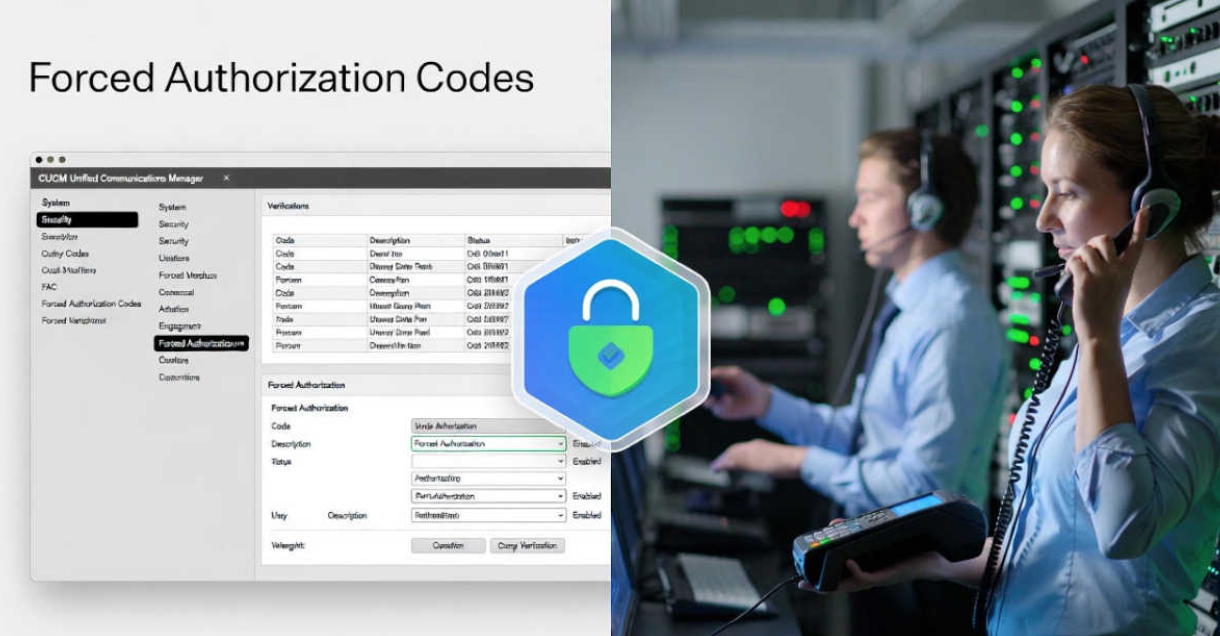
In Cisco Unified Communications Manager (CUCM), forced authorization codes (FAC) require entering a code for restricted calls, such as international or premium numbers. Codes support up to certain lengths with levels for fine-tuned access control. From recent CUCM releases, like those supporting Webex integrations, the default interdigit timer sits at 15 seconds, I’ve adjusted this in setups to avoid users timing out and giving up.
Payments Context for Credit Cards
On the payment side, these codes often six digits from the issuer, let merchants force through a declined transaction, typically for non-fraud reasons like address mismatches. Industry reports from 2023-2024 note that while useful for recovering some sales, improper overrides can lead to chargebacks, with global losses hitting billions annually.
Key Differences and Overlaps
Telephony focuses on routing control and cost tracking, while payments emphasize transaction recovery but both prioritize verification. In blended setups I’ve worked on, like VoIP for customer service tied to payments, telephony codes help log and secure related calls, adding accountability.
Common Myths and Realities
Myths around these codes persist, often from outdated info or oversimplifications. Having troubleshot many deployments, here are the ones I encounter most, with straightforward clarifications.
Myth 1: Codes Never Fail or Expire Unexpectedly
Not quite network issues or misconfigs can cause glitches in CUCM. Cisco’s feature guides highlight the need for proper route pattern ties; in my tests, regular checks prevented most random drops.
Myth 2: Overrides Are Always Safe for Merchants
This one’s risky. Without full verification, forced posts can trigger disputes. Recent analyses show chargebacks costing merchants heavily, so always confirm details directly with the issuer.
Setting Up Forced Authorization Codes
Setup doesn’t have to be complicated, but attention to details makes all the difference. From dozens of implementations, here’s what works reliably.
Step by Step CUCM Configuration
In CUCM Administration, go to Call Routing > Forced Authorization Codes > Add New. Set your code and level, then apply to route patterns by checking “Require Forced Authorization Code.” For example, in a client setup, we restricted international patterns this way, linking to specific devices for controlled access. Adjust the timer if needed 20 seconds often smooths things out.
Handling Payment Overrides Safely
Call the issuer for the code on soft declines, then document everything: time, reference, reason. Pair with checks like AVS; this approach has helped clients minimize disputes.
Integration with Modern Tools
Current CUCM versions tie well into Webex and cloud options. In recent projects, API links automated code handling, reducing errors noticeably.
Risks and Scam Prevention Strategies

Overrides carry real risks, especially with rising fraud attempts. Balanced strategies help manage them effectively.
Identifying Common Scams
Scammers might push urgent overrides with fake details, leading to later disputes. Reports from 2023-2024 highlight patterns in high-value or rushed scenarios.
Mitigation Techniques with Data
Global fraud losses reached $33.83 billion in 2023 per the Nilson Report, underscoring verification needs. Multi step confirmations are key. Tools for anomaly detection have proven useful in simulations.
Actionable Security Checklist
- Independently verify any issuer contact.
- Log and mask codes appropriately.
- Use short validity where possible.
- Review usage regularly.
- Train on warning signs, like unusual urgency.
Real World Applications and Case Studies
These codes shine in practical use here are examples from actual deployments.
Enterprise Telephony Use Case
A multi site firm used FAC to control call types, integrating with CDR for tracking. This curbed unauthorized usage effectively.
Merchant Payment Scenario
For occasional declines, careful overrides recovered valid sales. One case avoided loss by spotting a red flag early via documentation.
| Decline Reason | Override Possible? | Risk Level |
| Address Mismatch | Often yes | Medium |
| PIN Issue | Sometimes | High |
| Funds Check | Rarely | Low |
Hybrid Examples
Combining telephony security with payment flows, like secure confirmation calls, adds robust layers in integrated systems.
Alternatives and Comparisons
Not every situation calls for forced codes alternatives can fit better.
FAC vs. Client Matter Codes (CMC)
FAC restricts; CMC tracks billing.
| Feature | FAC | CMC |
| Main Goal | Access control | Accounting |
| Logging | Basic | Detailed |
| Best For | Restriction | Billing |
Many setups use both.
PIN IVR and Other Options
Voice based PINs feel more natural for some users, though they have their own considerations.
Choosing Based on Your Needs
Start with your priorities: strict control? FAC. Tracking? CMC. Scale as needed.
Data and Statistics on Usage
Recent figures provide context.
Telephony Adoption Trends
FAC remains a staple in CUCM for managed environments.
Payment Impact Metrics
The Nilson Report noted $33.83 billion in global card fraud losses for 2023, with chargebacks a major factor.
Ongoing Considerations
Fraud trends emphasize proactive measures.
Troubleshooting Common FAC Issues
Issues crop up here’s how to handle frequent ones.
- Timer too short: Increase in route pattern settings.
- Code failures: Check cluster sync and levels.
- User errors: Provide clear instructions or alternatives.
Compliance Considerations
For payments, align with standards like PCI DSS 4.0 (mandatory since 2024), focusing on secure handling.
Frequently Asked Questions (FAQs)
How do I add a forced authorization code in CUCM?
Via Call Routing section test thoroughly.
Are payment overrides risky in current environments?
Yes, without verification document everything.
What’s the difference between FAC and CMC?
Restriction vs tracking.
Can these work with cloud tools?
Yes, through modern integrations.
How to handle timer complaints?
Adjust to user feedback, like 20 seconds.
Common decline fixes with codes?
Best for non-fraud issues; confirm first.
In summary, forced authorization codes offer valuable control when implemented thoughtfully. Audit your setup, apply the checklists, and stay vigilant.
Legal & Security Disclaimer: This guide shares general insights based on industry practices and is not financial or legal advice. Consult professionals for your specific situation, especially regarding payments or compliance.