
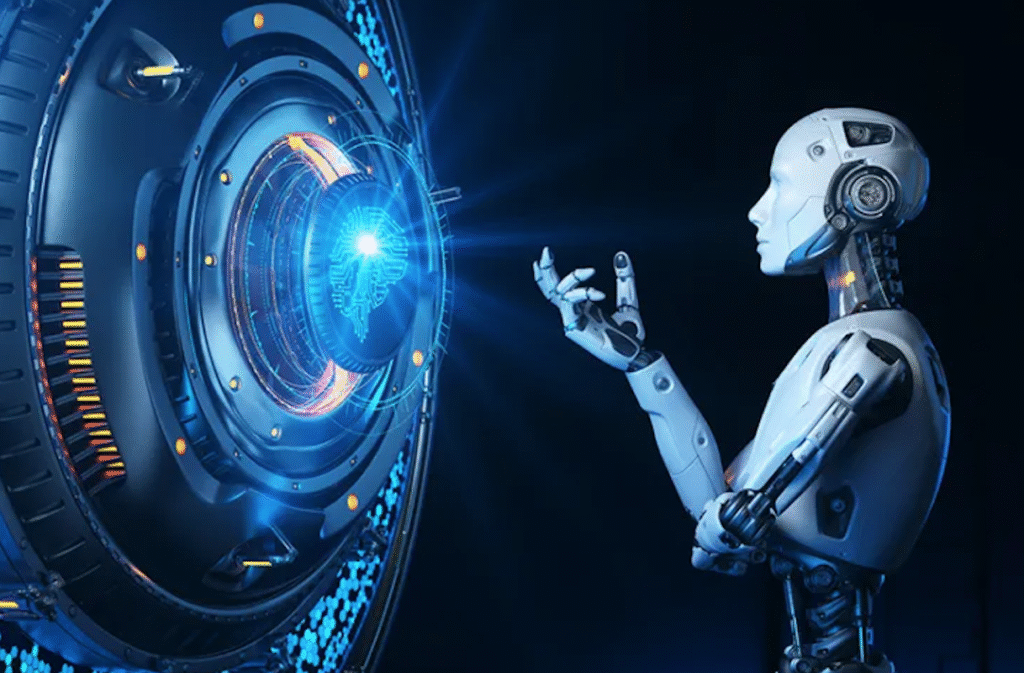
Artificial intelligence or AI is everywhere in 2026. It powers your phone’s voice assistant, recommends your next binge-watch, helps doctors spot diseases faster, and even creates stunning art or writes emails in seconds. But how does AI actually work? It might seem like magic, but it’s really smart math, massive data, and clever algorithms working together.
In this guide, we’ll break down how AI works step by step no tech degree required. Whether you’re just curious or thinking about diving into AI yourself, you’ll walk away understanding the basics and why 2026 feels like the year AI truly became our everyday partner.
Here are some eye-catching visualizations of glowing neural networks that power modern AI systems:

The Core Idea: AI Learns from Data (Not Hard-Coded Rules)
Unlike traditional computer programs where humans write every single rule (“if this, then that”), AI systems learn patterns from huge amounts of examples — just like how you learned to recognize cats by seeing thousands of cat photos as a kid.
The process usually follows these key steps:
- Collect Massive Data — Text, images, videos, numbers — the more the better.
- Train the Model — Feed the data into algorithms that adjust and improve over time.
- Make Predictions — Use what it learned to handle new situations.
- Keep Improving — Get feedback and retrain for better accuracy.
This learning approach is called machine learning the heart of almost all modern AI.
Check out this clear flowchart showing the end-to-end machine learning process that powers AI today:

The Star Player: Neural Networks & Deep Learning
At the center of most powerful AI in 2026 are neural networks computer systems loosely inspired by the human brain.
A neural network has layers of connected “neurons” (simple math units). Data flows through:
- Input Layer — Takes in raw information (like pixels of a photo)
- Hidden Layers — Detect patterns, edges, shapes, faces, etc.
- Output Layer — Gives the final answer (e.g., “This is a cat!”)
When stacked in many layers, it’s called deep learning the tech behind ChatGPT-style chatbots, image generators like DALL·E, and self-driving car vision.
Here’s a simple diagram of how a basic neural network processes information:

Generative AI: Creating New Things from Scratch
The biggest buzz in 2026 comes from generative AI systems that don’t just recognize or predict, but actually create.
Tools like large language models (LLMs) predict the next word in a sentence based on patterns from billions of texts. That’s why they can write essays, code, or poems — they’re super-advanced autocomplete on steroids!
The same idea applies to images, music, and video: AI learns patterns from real examples and generates brand-new content.
Why 2026 Feels Different: AI Is Getting Smarter & More Helpful
This year, we’re seeing agentic AI systems that don’t just answer questions but plan multi-step tasks, use tools, remember past interactions, and act more like helpful colleagues.
On-device AI is exploding too running powerful models directly on your phone or laptop for faster, private results.
These advancements make AI feel less like a tool and more like a true partner in work, creativity, and daily life.
Wrapping It Up: AI Is Human Made Magic You Can Understand
At its simplest, how AI works boils down to:
- Eating huge amounts of data
- Finding patterns through math and neural networks
- Improving with practice
- Applying what it learned to new challenges
In 2026, AI isn’t science fiction anymore it’s a powerful, evolving technology that’s already changing how we live, work, and create.
Want to go deeper? Start experimenting with free tools like ChatGPT, Gemini, or Claude. The best way to understand how artificial intelligence works is to play with it yourself!