That unmistakable click-clack cutting through a groove, it’s often claves driving the rhythm forward. I’ve spent years playing percussion, from backyard sessions to studio work, and nothing locks a band together quite like a solid clave pattern. These two simple sticks carry immense power, shaping everything from traditional Afro Cuban sounds to hidden grooves in pop and rock hits. If you’ve ever tapped your foot to a song that just pulls you in, chances are claves played a part. Let’s explore their story, how to play them, and why they remain essential today.
Key Takeaways:
- Claves trace back to West African traditions, adapted in Cuba from ship pegs, becoming the rhythmic “key” in Latin music.
- Master core patterns like son and rumba to understand their unique swing.
- Use proper grip and my 5-step framework to build confident timing quickly.
- Compare wood and fiberglass materials for the best tone and durability.
- Discover claves in surprising places from Elvis to modern pop—proving their timeless versatility.


Claves Origins and Evolution
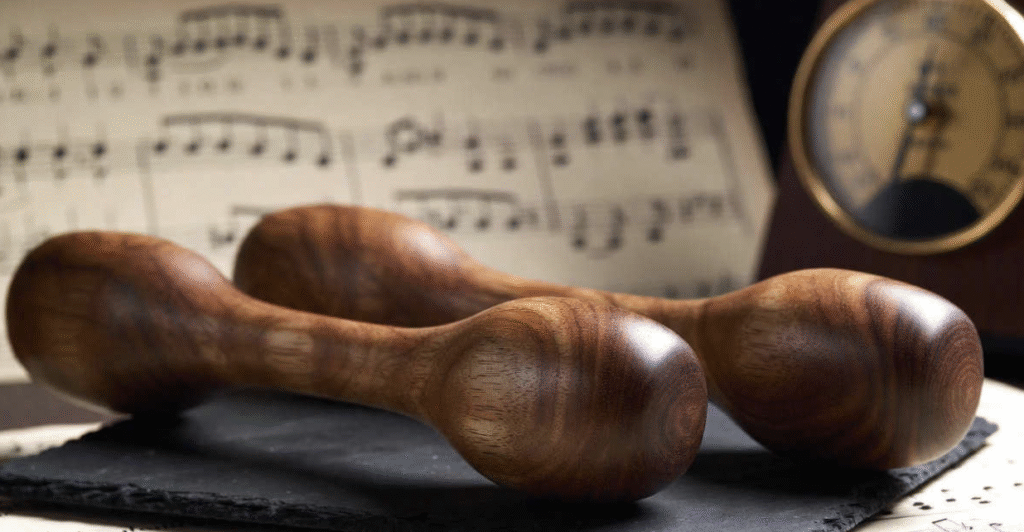
Claves appear basic: two cylindrical sticks, usually 8-10 inches long and 1-1.5 inches thick, made from dense hardwood. Their roots run deep in West African percussion, where wooden sticks or bell patterns guided communal rhythms and ceremonies. Enslaved Africans brought these traditions to the Americas, and in colonial Cuba, workers in Havana shipyards cleverly repurposed wooden pegs used for ship construction into musical tools. That sharp, penetrating tone cut through noise, perfect for keeping time.
By the 19th century, claves became integral to Afro-Cuban genres like son, rumba, and salsa, blending African syncopation with Spanish influences. The Spanish word “clave” means “key” or “keystone,” aptly describing its role as the rhythmic foundation everything else aligns to it. Early pairs were often mismatched in size for varied pitch, but modern ones are typically uniform.
Today, brands craft them from rosewood for classic warmth or fiberglass for modern consistency. From my experience introducing them to players, claves captivate instantly: they’re inexpensive, portable, and deliver immediate rhythmic impact. They embody cultural fusion and resilience, evolving from practical tools into a global staple in music education, live performances, and recordings.

Decades On, the Clave Rhythm Still Drives Latin Jazz and Jewish Music
Understanding Clave Rhythms
The instrument’s magic lies in the rhythm it plays—a five-stroke pattern spanning two bars, creating natural tension through asymmetry. Unlike even rock beats, this offset produces irresistible forward motion.
Core Patterns: Son vs. Rumba Clave
- Son clave (commonly 3-2): Three strikes in bar one (beats 1, 2.5, 4), two in bar two (1.5, 3). It’s the most widespread, driving songs like Elvis Presley’s “(Marie’s the Name) His Latest Flame” or Spin Doctors’ “Two Princes.”
- Rumba clave (often 2-3): Reverses emphasis for deeper syncopation, foundational in traditional rumba styles.


Myth Busting Common Clave Misconceptions
Many think claves are limited to Latin music or require advanced skill. Not true—the pattern adds groove universally. I’ve incorporated it into rock rehearsals for tighter timing without overwhelming the mix. Another myth: direction doesn’t matter. Flipping 3-2 to 2-3 shifts the entire feel dramatically. Drummers often replicate it on rim shots or cowbells, proving it’s a concept beyond the sticks.
This subtle syncopation explains why clave rhythms hook listeners subconsciously, appearing in diverse genres worldwide.
How to Play Claves Effectively
Technique separates dull thuds from bright, resonant clicks—I’ve coached dozens through this breakthrough.
Grip and Striking Techniques
Hold one clave (the resonator, or “hembra”) lightly in your non-dominant hand, cupped between thumb and fingertips with palm facing up—this forms a natural chamber for vibration. Rest it on fingernails for clearer tone. Grip the striker (“macho”) in your dominant hand like a relaxed drumstick. Strike the resonator’s center firmly but controlled; experiment with contact points to avoid dull spots. Keep wrists and fingers loose—tension muffles everything.


Practice Exercises for Beginners
“Feeling” the offsets frustrates many at first. Here’s my 5-Step Clave Mastery Framework, developed from teaching students:
- Clap slowly—count aloud to internalize spacing and asymmetry.
- Tap on thigh or chest—build muscle memory quietly.
- Introduce sticks—focus on resonance once clapping flows.
- Add metronome or simple track—start at 60-70 BPM, gradually increase.
- Flip directions and improvise—alternate 3-2/2-3 over songs for versatility.
One learner went from rigid counting to intuitive groove in weeks using this progression.
Integrating Claves in Bands
Cue off bass or piano lines they often echo clave. In a cover of The Who’s “Magic Bus,” subtle claves glued the rhythm section. Communicate direction upfront; mismatches disrupt flow. Start understated, let the pattern emerge.
Choosing and Maintaining Your Claves
Material choices define tone, projection, and longevity.
Wood vs. Fiberglass: Pros and Cons
| Material | Tone | Durability | Cost | Best For |
| Rosewood/Hardwood (e.g., LP, Meinl, Ludwig) | Warm, rich, traditional resonance | Good, sensitive to humidity | Higher | Authentic Afro-Cuban, studio warmth |
| Fiberglass (e.g., LP King Klave, Pearl) | Bright, consistent, cutting | Excellent, weather-resistant | Lower-Mid | Outdoor gigs, practice, loud settings |


Buying Guide with Top Picks
Beginners: Affordable fiberglass for forgiveness. Pros: Dense rosewood like LP Grenadilla for projection. Test pairs even grain and clear ring matter. Brands like Latin Percussion (LP), Meinl, and Pearl lead for quality and consistency.
Maintenance Tips to Last Longer
- Wipe with soft cloth after playing to remove oils.
- Store in dry cases avoid extremes to prevent warping.
- Polish wood occasionally with lemon oil.
- Inspect for cracks regularly.
These habits keep my oldest rosewood pair sounding vibrant after years.
Claves in Modern Music Genres
Clave rhythms extend far beyond origins.
Pop and Rock Adaptations
The Bo Diddley beat a clave variant powers his namesake song, Bow Wow Wow’s “I Want Candy,” George Michael’s “Faith,” and U2’s “Desire.” Subtle son clave drives Santana’s “Oye Como Va,” while variants appear in Adele tracks or reggaeton like “Despacito.”
Classroom and Educational Uses
Claves excel in teaching simple, group-friendly for syncopation, coordination, and cultural lessons. Rising music programs favor them for accessibility.

Electronic and Hybrid Innovations
Digital plugins mimic the click for quiet practice or layering in productions, bridging acoustic tradition with modern tech.


Real-World Applications and Case Studies
Famous Songs Featuring Claves
- Classics: Beatles’ “And I Love Her,” Elvis tracks.
- Rock/Pop: Spin Doctors’ “Two Princes,” DMX’s “Party Up.”
- Modern: Subtle in various fusions and reggaeton.
User Case Studies from Musicians
A drummer friend overcame stage timing nerves through daily clave drills now it anchors live sets confidently. Educators report boosted student focus and teamwork in group exercises.
Custom Clave Fusion Framework
Blend into any style:
- Establish basic son over a loop.
- Layer straight backbeat for rock/hip-hop.
- Add dynamic fills.
- Record and refine variations.
This sparks unique grooves fast.
Actionable Checklist for Live Performance
- Warm patterns backstage slowly.
- Test venue acoustics for projection.
- Visual/verbal sync with bandmates.
- Carry backup pair.
- Breathe deeply relaxation ensures steady feel.
Frequently Asked Questions (FAQs)
What is the difference between 2-3 and 3-2 clave?
3-2 starts with stronger emphasis; 2-3 builds anticipation. Direction transforms the groove’s energy.
How do I feel the clave rhythm as a beginner?
Move your body while practicing slowly. Follow the 5-step framework with familiar tracks.
Are claves suitable for non-Latin music?
Absolutely from Bo Diddley rock to subtle pop and EDM tension.
What’s the best material for claves?
Rosewood for warm authenticity; fiberglass for bright reliability.
How has clave use evolved in recent years?
Expanding in education, electronic production, and global fusions.
Can I use electronic claves for practice?
Yes ideal for quiet, accurate muscle memory building.
You’ve journeyed from claves’ African-Cuban roots to modern applications, armed with techniques and inspiration. Start today: Clap a pattern, grab sticks if available, layer over your favorite song. Watch the groove come alive. What’s your first track? Dive in the rhythm awaits.