Apple’s long-awaited entry into the foldable market is shaping up to be one of the most ambitious hardware shifts in the company’s history. As reports intensify, the iPhone Fold is expected to embrace an eSIM-only architecture, eliminating the physical SIM tray entirely. While this move echoes Apple’s broader design philosophy of sleek minimalism and internal optimization, it may also create friction in key markets especially mainland China, where users still value the speed, flexibility, and practicality of traditional SIM card usage.
In this extensive report, we explore the emerging details surrounding Apple’s foldable device, analyze the implications of an eSIM-only design, and assess whether this bold choice will enhance or hinder the iPhone Fold’s global performance.
A Super-Slim Foldable: Apple’s Most Radical Design Leap Yet
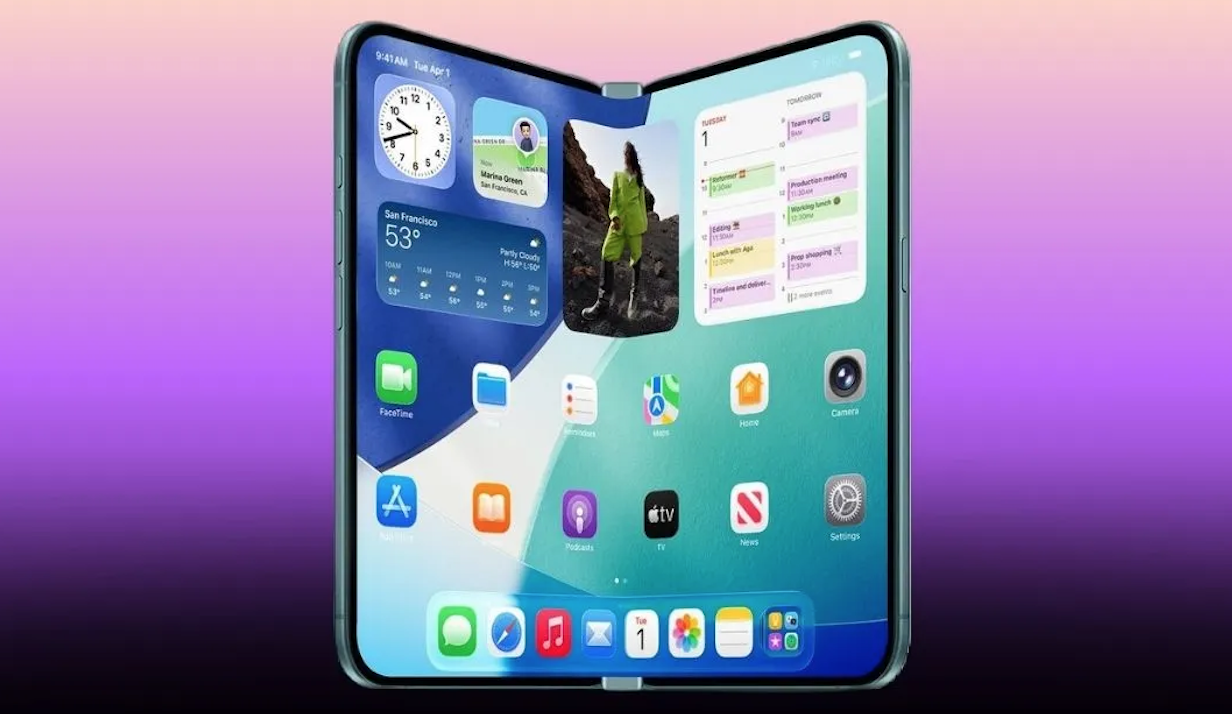
Based on credible leaks from industry insiders, the iPhone Fold is slated for launch late next year or in early 2027. Apple’s design approach focuses heavily on miniaturization, resulting in a device described as “super thin,” akin to “two titanium iPhone Airs fused side by side.”
Expected Key Specifications
- 5.5-inch outer display
- 7.8-inch inner screen resembling the form factor of the iPad mini
- Book-style folding mechanism
- A strong emphasis on keeping internal components lightweight and compact
This push toward ultra-thin engineering is one of the driving reasons Apple is reportedly abandoning the traditional SIM card slot. The removal of the tray frees up valuable internal real estate, enabling a slimmer hinge, larger battery compartments, and enhanced thermals.
Why Apple Is Going All-In on eSIM for the Foldable
Insider leaks suggest Apple sees an eSIM-only configuration as essential for achieving the iPhone Fold’s design goals. The company has already rolled out eSIM-only models in select regions, most notably the U.S., with the iPhone 14 and iPhone Air.
Benefits Behind Apple’s Decision
- Space optimization: Fewer mechanical parts and more room for advanced internals
- Improved water resistance: Eliminating physical openings strengthens durability
- Streamlined logistics: Simplifies SKUs for different markets
- Future-proofing: Aligns with global carriers moving toward digital provisioning
However, these advantages come with substantial challenges in mainland China, one of Apple’s most influential markets.
China’s Strong Preference for Physical SIM Cards
The Chinese mobile ecosystem is a unique environment shaped by rapid device turnover, high resale activity, and frequent SIM swapping for promotional or trial services. For millions of users, the ability to change SIMs instantly—without carrier verification or store visits—is not just convenient; it is essential.
Why eSIM Is Struggling in China
- Carrier provisioning remains slower than physical SIM activation
- eSIM requires mandatory in-store verification, limiting one-tap convenience
- Dual physical SIM slots are deeply ingrained in user habits
- The broader secondhand market depends on quick SIM insertion and removal
If Apple launches the iPhone Fold as an eSIM-only device in China, adoption could be significantly constrained unless carriers overhaul their onboarding systems.
Lessons From the iPhone Air: A Warning Sign for Apple
Apple’s ultra-thin iPhone Air provides valuable insight into the potential challenges facing the upcoming foldable. The iPhone Air embraced an eSIM-only format in China as well—and the results have been underwhelming.
Market Feedback on the iPhone Air
- Slower-than-expected sales, globally and in China
- Consumers prioritized practicality over thinness
- Compromises such as weaker battery life and single camera overshadowed its sleek design
- Many Chinese buyers avoided it specifically due to eSIM requirements
This precedent suggests that Apple must carefully balance innovation with usability, particularly in regions where user expectations differ sharply from Western markets.
Next-Gen Foldable Features Aiming to Win Over Buyers
Despite concerns, Apple is preparing to load the iPhone Fold with cutting-edge technology designed to outshine competitors and potentially offset the inconveniences of an eSIM-only model.
Rumored Breakthrough Technologies
- 24-megapixel under-display camera for a seamless full-screen experience
- Crease-free flexible OLED panel, a long-standing challenge for foldable devices
- Enhanced hinge engineering to improve durability
- Optimized battery architecture to support the dual-screen format
- Pro-level internal performance comparable to flagship iPhones
These advancements may give Apple a compelling competitive edge, especially among early adopters and premium buyers seeking the latest innovations.
How eSIM Adoption May Evolve by 2027
Apple’s long-term vision likely anticipates that global eSIM adoption will accelerate significantly by the time the iPhone Fold launches. Many regions, including Europe, the United States, and parts of Southeast Asia, are already moving toward widespread digital SIM usage.
However, China remains the critical unknown factor.
For a Successful Launch in China, Apple Needs:
- Carrier support for over-the-air eSIM provisioning
- Faster activation workflows, eliminating mandatory in-store visits
- More flexible multi-eSIM profiles for dual-SIM users
- Resale-friendly eSIM transfer tools
The iPhone Fold could become a catalyst for nationwide eSIM modernization—if carriers are ready.
Will the iPhone Fold’s eSIM-Only Strategy Be a Hit or a Hurdle?
The iPhone Fold is positioned to become Apple’s most futuristic product since the original iPhone, blending design audacity with breakthrough functionality. Yet the choice to move ahead with eSIM-only connectivity may spark resistance in markets where physical SIMs remain the norm.
Ultimately, the success of Apple’s foldable will depend on:
- How effectively Apple communicates the advantages of an eSIM-only experience
- Whether carriers evolve quickly enough to meet user expectations
- Whether the foldable’s innovative features can outweigh the trade-offs
If Apple executes flawlessly, the iPhone Fold could redefine the future of mobile devices. If not, it may face the same uphill climb witnessed with the iPhone Air.